

LEED Certified WPC for Sustainable Architecture
May 12, 2026
Sustainability in Architecture: How WPC Contributes to LEED Credits

Modern commercial projects are under pressure from stricter ESG targets, rising maintenance costs, and increasingly demanding environmental certification standards. For architects and contractors, selecting LEED-certified WPC systems is no longer only about appearance - it directly affects lifecycle cost, carbon reporting, facade durability, and project bid competitiveness.
Traditional hardwood cladding and high-energy materials such as aluminum or natural stone often lead to long-term issues with maintenance labor, coating renewal, and embodied carbon emissions. Properly engineered WPC facade and decking systems provide an alternative that aligns with sustainable construction requirements while maintaining practical installation efficiency.
Key Takeaways for Architects & Contractors
WPC systems manufactured with recycled HDPE and reclaimed wood fiber can contribute to LEED Materials & Resources (MR) credits through recycled content and responsible material sourcing.
Co-extruded WPC facade systems reduce solar heat absorption and improve thermal envelope stability, helping commercial buildings lower operational cooling loads.
Fire-rated and low-maintenance WPC materials improve long-term building TCO by reducing repainting cycles, timber replacement, and annual maintenance labor.
Green Building Certification Requirements and Material Selection
LEED-certified commercial buildings are evaluated through multiple environmental categories, including:
| LEED Category | Material-Related Impact |
|---|---|
| Materials & Resources (MR) | Recycled content, regional sourcing, material transparency |
| Energy & Atmosphere (EA) | Thermal performance and energy reduction |
| Indoor Environmental Quality (EQ) | VOC emission control |
| Sustainable Sites (SS) | Heat island reduction |
| Innovation (IN) | Advanced environmental product integration |
For exterior architectural materials, project consultants increasingly review:
Recycled raw material percentage
Product lifecycle expectancy
VOC emissions
Maintenance frequency
Environmental Product Declaration (EPD)
Fire safety compliance
UV weathering performance
Moisture resistance stability
This shift is particularly visible in hospitality projects, airport terminals, healthcare facilities, and municipal mixed-use developments where lifecycle maintenance budgets are heavily scrutinized during tender evaluation.
Compared with natural hardwood systems requiring frequent oiling or coating renewal, commercial-grade WPC reduces maintenance interventions significantly over a 15-20 year operation cycle.
Vocana Recycled Material Content and Carbon Footprint
Vocana WPC systems are manufactured using reclaimed wood fiber and recycled HDPE polymer content. Depending on the product series and structural requirements, recycled material ratios can exceed 60%.
The environmental value is not limited to recycled content alone. Material durability also affects the carbon footprint over the building lifecycle.
Why Lifecycle Stability Matters
Many facade materials generate hidden environmental costs through:
Repainting cycles
Surface sanding
Chemical coating applications
Premature replacement
Timber deformation losses
Commercial WPC systems using co-extrusion protective cap technology reduce these recurring maintenance activities.
Typical engineering performance indicators include:
| Technical Property | Typical Commercial WPC Value |
|---|---|
| Water absorption | < 2% |
| QUV accelerated weathering | 2000 hours |
| Thermal expansion coefficient | Approx. 3.5×10⁻⁵ /°C |
| Surface slip resistance | R10 / R11 |
| Fire classification | EN13501 B-s1,d0 available |
For architects preparing environmental documentation, these performance metrics provide measurable support for specification decisions.
Expert Tip from Vocana Engineering Team
In coastal hospitality projects, facade substructure spacing should be adjusted according to both wind load and thermal expansion movement. For commercial WPC cladding exceeding 2.2 meters in profile length, expansion clearance below 8 mm frequently causes panel deformation after seasonal temperature variation. Stainless steel fasteners grade SUS316 are strongly recommended in salt spray environments above C4 corrosion category.
Reducing Building Envelope Energy Consumption
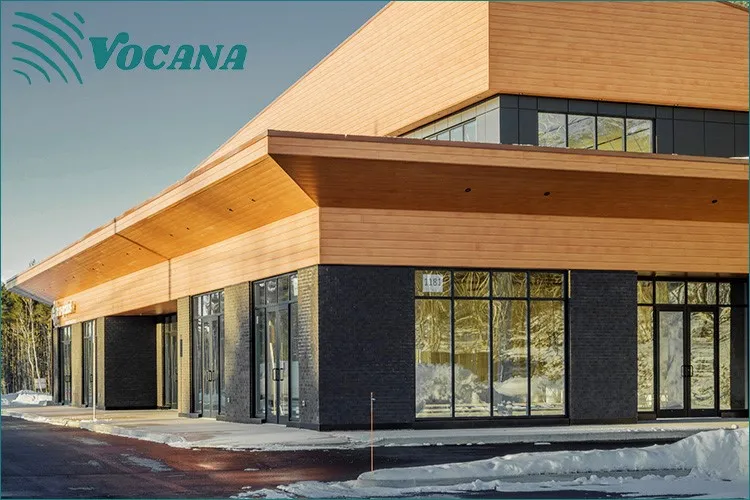
Exterior wall assemblies directly affect HVAC operating loads, especially in tropical, subtropical, and Middle Eastern climates.
WPC facade systems contribute to thermal stability through:
Lower thermal conductivity compared with aluminum
Ventilated rainscreen installation structures
Reduced surface heat accumulation
Improved cavity airflow behind facade panels
In high-UV commercial plazas, aluminum surfaces can reach significantly higher temperatures under direct solar exposure. Co-extruded WPC surfaces maintain more stable thermal behavior, particularly when lighter color finishes are specified.
Comparative Material Behavior
| Material | Thermal Conductivity | Surface Heat Gain | Maintenance Frequency |
| Natural hardwood | Medium | Medium | High |
| Aluminum cladding | High | High | Medium |
| Commercial WPC | Low-Medium | Lower | Low |
This becomes especially valuable in:
Outdoor retail promenades
Resort soffit systems
Transit-oriented developments
Commercial rooftop deck areas
Educational campuses
Real Project Scenario
In a coastal resort development exposed to high humidity and salt spray conditions, Vocana co-extruded WPC ceiling and facade systems were selected to replace hardwood soffit panels originally specified during schematic design.
The engineering team reduced anticipated maintenance operations from a 2-3 year recoating cycle to routine water cleaning only. The final specification also improved corrosion resistance performance through concealed aluminum support framing combined with stainless fastening systems.
Similarly, in Middle Eastern mixed-use commercial projects exposed to high annual UV intensity, WPC shading systems demonstrated improved color stability after 2000-hour QUV accelerated testing compared with untreated timber alternatives.
Additional Advantages in Project Tendering
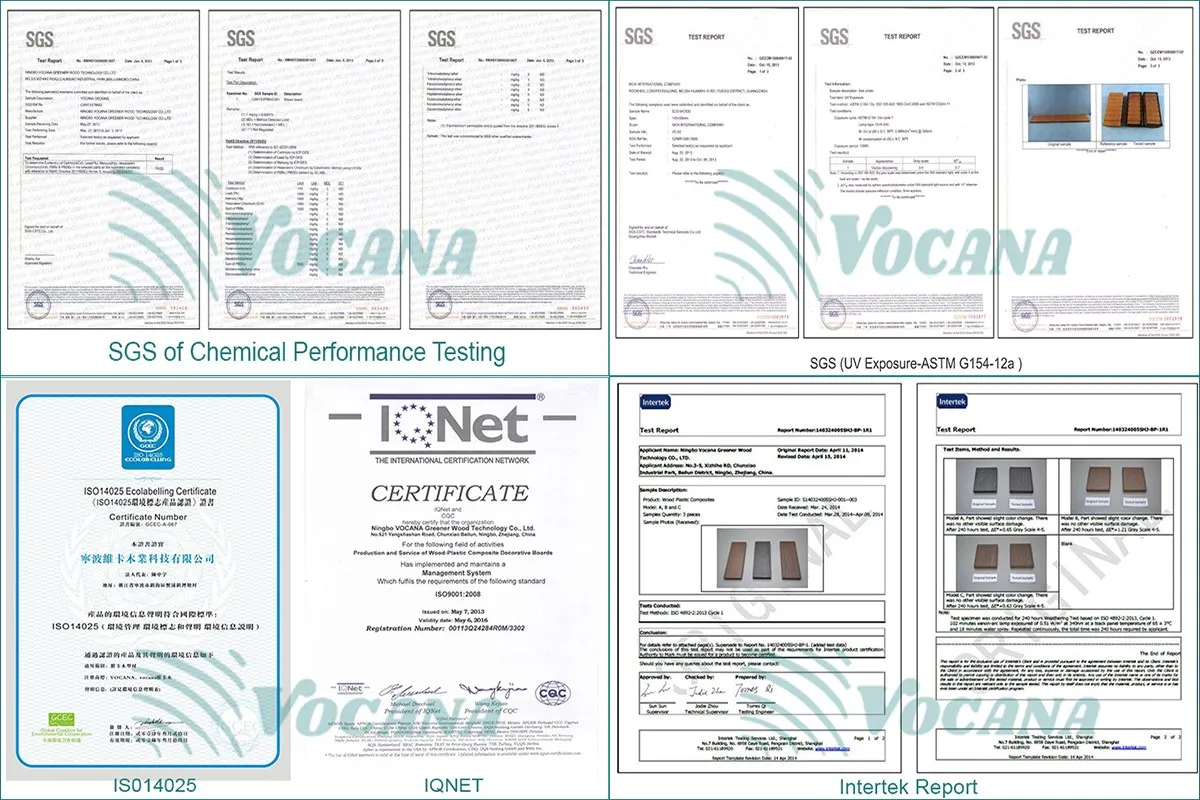
Click for more Vocana WPC Certificates & Testing Reports
Environmental certification requirements increasingly influence contractor prequalification and developer procurement decisions.
Sustainable building products often contribute indirect commercial advantages during bidding stages, particularly when projects include:
Government-backed green building requirements
ESG investment reporting
Hotel sustainability standards
Airport or infrastructure environmental mandates
Corporate carbon reduction commitments
Architectural specification teams frequently prioritize materials capable of supplying:
SGS testing reports
Fire classification documentation
UV aging reports
Slip resistance reports
Material TDS documentation
Installation methodology drawings
This documentation reduces technical uncertainty during consultant review.
WPC vs Traditional Timber Lifecycle Cost
| Cost Factor | Hardwood Cladding | Commercial WPC |
|---|---|---|
| Initial installation | Medium-High | Medium |
| Annual maintenance | High | Low |
| Recoating labor | Required | Not required |
| Moisture deformation risk | High | Low |
| Color stability | Variable | Controlled |
| Expected maintenance cycle | 2-3 years | Minimal |
For developers calculating long-term operational expenditure, lower maintenance frequency often offsets initial material cost differences within several years.
Vocana's Engineering Experience
Commercial project teams increasingly verify whether material suppliers possess genuine engineering experience rather than only catalog-level marketing claims.
Vocana's project-oriented approach includes:
Commercial facade system engineering
Fire-rated WPC product development
Climate-specific product recommendations
Installation node optimization
CAD-based quantity estimation
Project-specific accessory coordination
This practical engineering involvement matters because WPC performance depends heavily on:
Correct joist spacing
Ventilation cavity design
Expansion allowance
Fastener selection
Subframe compatibility
Technical support during design development and shop drawing review reduces installation risk and material waste during execution phases.
For project verification and corporate background, architects and consultants can review the company profile and certification documentation through the About Us and Certificate sections.
FAQ for LEED-certified WPC Facades
What material characteristics should architects evaluate when specifying WPC systems for LEED-certified commercial facade projects?
Architects should prioritize recycled content ratio, fire classification, QUV weathering performance, thermal expansion coefficient, VOC emissions, and lifecycle maintenance requirements. Materials supported by SGS reports, EN13501 fire testing, and long-term UV stability data are more suitable for commercial sustainable building specifications.
How does commercial-grade WPC help reduce long-term operational costs compared with hardwood cladding systems?
Commercial WPC reduces repainting labor, coating material consumption, and moisture-related replacement frequency. In high-humidity or coastal environments, properly installed co-extruded WPC systems typically require periodic cleaning only, significantly lowering lifecycle maintenance expenditure over 15-20 years of building operation.
What installation details most affect the durability of exterior WPC facade systems in high-temperature climates?
Expansion clearance, rear ventilation airflow, subframe alignment, and fastening system selection are critical. Insufficient expansion gaps frequently cause deformation under thermal cycling. For large-format commercial façades, engineering teams should also account for wind load calculations and profile span limitations during detailing.
Forward-Looking Engineering Recommendation
As ESG reporting and embodied carbon calculations become standard requirements in commercial construction, facade materials will increasingly be evaluated based on measurable lifecycle performance rather than appearance alone. Architects and contractors who integrate recycled-content WPC systems early during schematic design can improve specification efficiency, simplify sustainability documentation, and reduce long-term maintenance exposure simultaneously.
Request Engineering Support from Vocana
Send CAD drawings for free quantity estimation and facade layout recommendations
Request commercial-grade WPC samples for project specification review
Download TDS documentation, SGS test reports, and fire-rating certifications for tender submission support
You Might Also Like
-

Solid Board WPC Porch Decking for Covered Outdoor Spaces ...
-

WPC Slat Wall Panels for Schools & Training Center Classr...
-
Interior WPC Wall Louvers Panels for Commercial Projects
-

WPC Bedroom Wall Panels for Apartments & Hotels in Europe...
-

Thermal Insulated WPC Wall Cladding for Energy-Efficient ...
-

Rustic Wood-Look WPC Exterior Cladding for American Count...