

Composite Decking Heat Retention in Full Sun
May 12, 2026
Does WPC Decking Get Too Hot? Truths and Mitigation Strategies
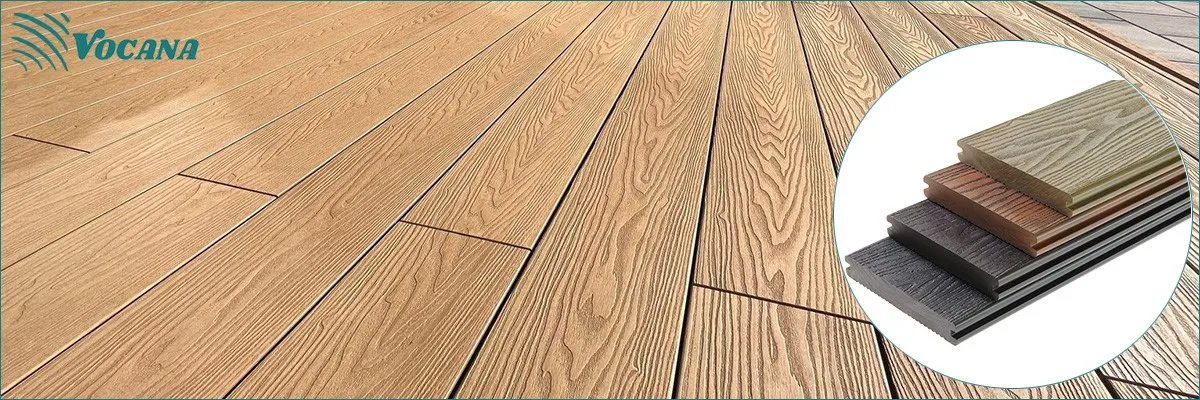
Outdoor commercial spaces exposed to direct sunlight frequently face complaints related to barefoot comfort, surface heat buildup, and premature material aging. For architects specifying composite decking heat retention performance in rooftop terraces, pool decks, hospitality resorts, and mixed-use developments, the real issue is not whether WPC gets warm - all exterior materials absorb heat - but how quickly the surface temperature rises, how long it retains heat, and whether the system remains practical under continuous UV exposure.
In high-temperature regions such as the Middle East, Southeast Asia, Australia, and southern coastal markets, decking specification errors can directly affect user comfort, maintenance costs, and long-term project reputation.
Key Takeaways for Architects & Contractors
Dark-colored WPC decking can reach surface temperatures above 68°C under 35°C ambient weather, while light gray or teak-tone boards typically remain 8-15°C cooler.
Infrared reflective co-extrusion layers and low heat-absorption pigments reduce solar heat buildup and improve barefoot comfort in poolside applications.
Deck orientation, board color, ventilation cavity depth, and subframe airflow affect surface temperature more than board thickness alone.
Surface Temperature Test Data in 35°C Weather
The claim that "composite decking gets too hot" is partially true, but the result depends heavily on color selection, capstock formulation, solar reflectance index (SRI), and site exposure conditions.
Vocana engineering teams conducted comparative outdoor exposure testing under direct sunlight conditions with ambient air temperature averaging 35°C.
Surface Temperature Comparison Test
| Decking Material | Surface Color | Average Surface Temp |
|---|---|---|
| Traditional dark WPC | Dark walnut | 68-72°C |
| Co-extruded WPC | Teak | 56-60°C |
| Co-extruded WPC | Light gray | 52-57°C |
| Natural hardwood | Dark tropical wood | 60-66°C |
| Stone pavers | Dark charcoal | 70-78°C |
Why Dark Decking Heats Up Faster
Heat buildup is primarily influenced by:
Solar radiation absorption
Infrared reflectivity
Surface emissivity
Pigment composition
Ventilation beneath decking
Thermal mass density
Dark pigments absorb a higher percentage of infrared radiation, particularly between 700 nm and 2500 nm wavelengths. Dense materials with limited airflow beneath the deck surface retain heat longer after sunset.
This issue becomes especially visible in:
Rooftop hospitality decks
Poolside barefoot traffic areas
Marina walkways
High-exposure commercial plazas
South-facing terraces
By comparison, lighter color formulations reflect more solar energy and reduce peak surface temperature accumulation.
How Infrared Reflective Technology Reduces Heat Absorption
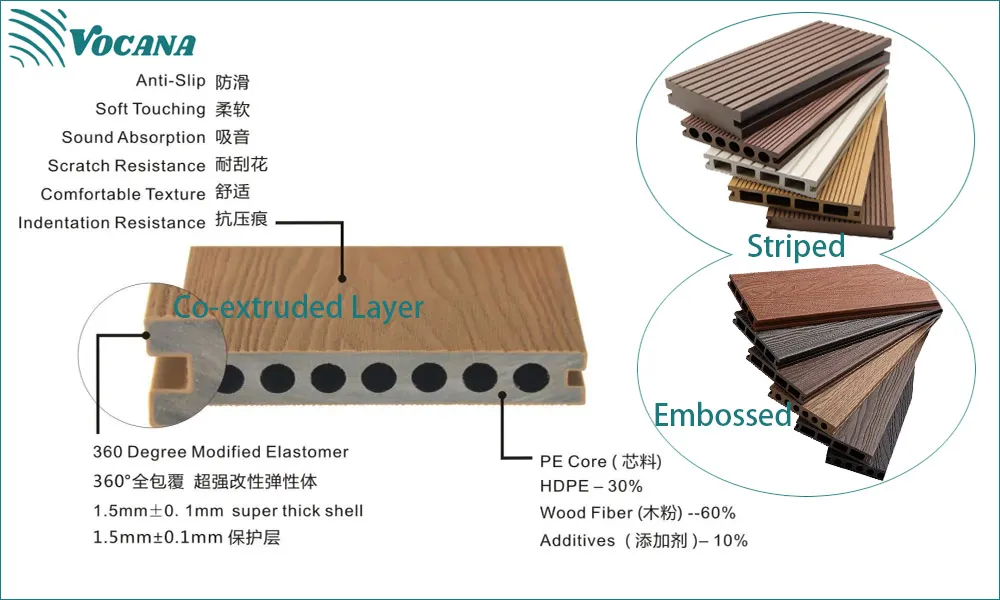
Modern capped WPC systems use engineered co-extrusion protective layers rather than exposed wood-plastic substrate surfaces.
Vocana's co-extrusion structure incorporates:
UV stabilizers
Infrared reflective mineral additives
Anti-fading pigments
Low water absorption capstock
Abrasion-resistant polymer layer
These components improve thermal behavior during continuous solar exposure.
Technical Mechanism
Infrared reflective additives work by reducing solar heat absorption instead of merely resisting UV degradation.
The protective cap layer reflects part of the near-infrared radiation spectrum before thermal energy transfers into the board's core structure.
Commercial Engineering Benefits
| Feature | Standard WPC | Reflective Co-Extrusion WPC |
|---|---|---|
| Surface heat accumulation | Higher | Reduced |
| Color fading resistance | Moderate | Improved |
| UV stability | Standard | Enhanced |
| Barefoot comfort | Lower | Better |
| Cleaning frequency | Standard | Lower staining retention |
In practical installation scenarios, the difference becomes noticeable during midday exposure between 11:00 AM and 3:00 PM.
Additional Site Factors Affecting Deck Temperature
Even high-performance cool-touch decking can become uncomfortable when installation design ignores environmental heat variables.
Key factors include:
Lack of under-deck ventilation
Concrete substrate heat reflection
Enclosed rooftop cavities
Low wind circulation
Full west-facing exposure
Metal framing heat transfer
For commercial rooftop projects, raised pedestal systems often reduce heat retention more effectively than low-clearance sleeper installations because airflow beneath the deck dissipates trapped thermal energy.
Expert Tip from Vocana Engineering Team
In pool deck installations exposed to full western sun, maintaining a minimum 35-50 mm rear ventilation cavity below WPC decking significantly reduces thermal retention after peak afternoon exposure. Projects using aluminum joists directly above concrete slabs without airflow gaps frequently report higher nighttime heat storage and slower surface cooling cycles.
Color Selection Recommendations for Poolside Applications
Color selection remains one of the most effective heat mitigation strategies.
For barefoot commercial applications such as:
Resort swimming pools
Beach clubs
Rooftop lounges
Waterpark walkways
Wellness centers
Vocana engineering teams typically recommend:
Recommended Low-Heat Decking Colors
| Recommended Color | Heat Retention Performance | Typical Application |
|---|---|---|
| Light gray | Lowest | Pool decks |
| Weathered teak | Low | Hospitality terraces |
| Sand beige | Low | Coastal resorts |
| Medium oak | Moderate | Commercial promenades |
| Dark walnut | High | Shaded areas only |
Why Light Gray Performs Better
Light gray pigments generally provide:
Higher solar reflectance
Reduced infrared absorption
Lower peak temperature accumulation
Improved barefoot usability
Teak-tone surfaces are frequently selected for hospitality projects because they balance lower heat absorption with natural architectural aesthetics.
By contrast, dark charcoal and espresso finishes should be limited to:
Covered decks
Pergola-shaded terraces
Temperate climates
Low barefoot traffic areas
Real Project Scenario: Coastal Resort and Middle East Plaza Applications
In a Southeast Asian beachfront resort project exposed to continuous UV radiation, salt spray, and barefoot guest traffic, the original hardwood decking specification created recurring maintenance issues, including splintering, surface overheating, and annual oil treatment requirements.
Vocana co-extruded WPC decking in light teak finish replaced the hardwood system across pool terraces and elevated lounge decks.
Project outcomes included:
Reduced annual maintenance labor
Improved barefoot comfort during afternoon use
Lower water absorption under tropical humidity
Better color consistency after UV exposure
Reduced slip risk with R11 textured surface finish
In a separate Middle Eastern mixed-use commercial plaza project, surface heat control became a major design concern due to summer ambient temperatures exceeding 45°C.
The engineering team adjusted:
Deck orientation
Board color selection
Pedestal cavity airflow
Expansion spacing
Shade integration
The final installation used light gray capped WPC decking combined with tensile canopy shading to reduce direct solar accumulation during peak operating hours.
Vocana's Engineering Experience
Thermal behavior in exterior decking cannot be evaluated through catalog images alone. Surface temperature performance depends on material chemistry, installation engineering, climate exposure, and long-term UV stability.
Vocana's project support process includes:
Infrared exposure analysis
Color recommendation by climate zone
Expansion movement calculations
Pedestal system guidance
Pool deck drainage detailing
QUV weathering validation
Slip resistance testing according to DIN 51130
For commercial architects and contractors, these engineering details directly affect:
Occupant comfort
Maintenance budgets
Warranty risk
Material replacement frequency
Operational safety compliance
Projects located in high UV or high-temperature regions benefit from early-stage decking specification review before tender finalization.
FAQ for Weatherproof composite decking
What is the best decking color for commercial pool areas exposed to direct sunlight throughout the day?
Light gray, weathered teak, and sand beige WPC decking generally perform better under continuous UV exposure because they reflect more infrared radiation and reduce surface heat buildup. Dark walnut and charcoal boards absorb significantly more solar energy and are better suited for shaded installations.
How much cooler is capped composite decking with infrared reflective technology compared with standard dark WPC boards?
Field exposure testing under 35°C ambient conditions commonly shows reflective-capped WPC surfaces operating 8-15°C cooler than traditional dark composite decking. Actual performance varies depending on pigment formulation, ventilation cavity depth, substrate material, and surrounding reflective surfaces.
What installation factors most affect composite decking heat retention on rooftop commercial projects?
Ventilation airflow beneath the deck, board color, cavity clearance, pedestal height, substrate reflectivity, and exposure orientation strongly affect thermal retention. Rooftop decks installed directly above concrete slabs without sufficient airflow often experience significantly higher surface temperatures during afternoon operating hours.
Forward-Looking Engineering Recommendation
As commercial outdoor architecture increasingly expands into rooftop hospitality, wellness environments, and mixed-use public spaces, thermal comfort will become a more important specification factor alongside fire safety, slip resistance, and UV durability. Decking materials that reduce heat retention while maintaining low maintenance requirements will continue gaining preference in hospitality and public infrastructure projects.
Request Technical Support from Vocana
Send CAD drawings for decking layout optimization and quantity estimation
Request engineering-grade WPC samples for thermal comparison testing
Download TDS documents, QUV weathering reports, and SGS performance certifications for project specification review
You Might Also Like
-

WPC Plank Flooring for Commercial Walkways & School Corri...
-

Interior WPC Decorative Panels for Southeast Asia Commerc...
-

Wood Grain WPC Slatted Cladding for Resort Villas, Bungal...
-

Easy Installation WPC Siding Supplier for Modular School ...
-

Easy Installation Waterproof WPC Siding for Outdoor Pavil...
-

Hospital Zoning WPC Partition Wall Panels Supplier | Hygi...