

WPC Materials for Hot, Humid & Coastal Climates
--- Weather-Resistant WPC Solutions for Tropical & Coastal Projects - Vocana WPC
For architects, developers, contractors, and building material buyers working in Southeast Asia, the Middle East, Australia, and other climate-exposed markets, exterior and semi-exterior building materials face some of the most challenging conditions in construction. Intense sun, seasonal rain, humidity, salt-laden air, surface moisture, and repeated expansion and contraction can quickly expose the weaknesses of poorly selected materials.
In tropical, coastal, and high-UV regions, the key question is not simply whether WPC looks good - it is whether the system can perform reliably over time in real project conditions.
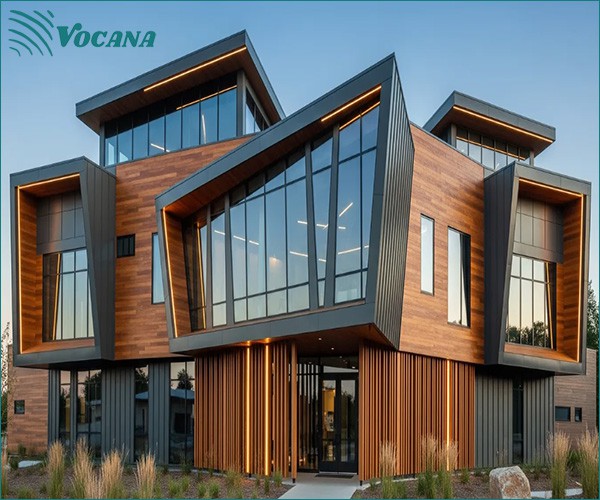
WPC for Hot
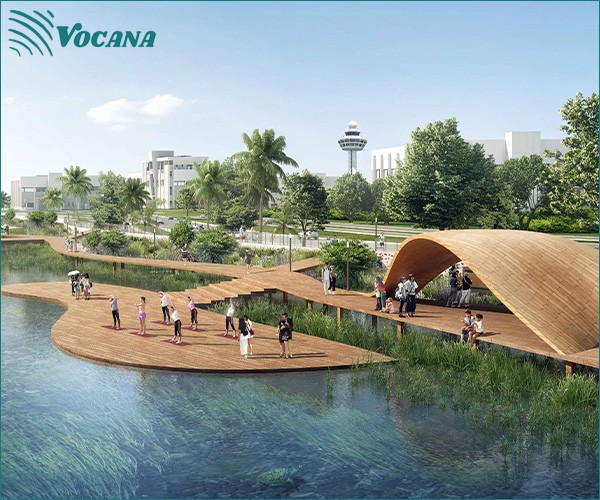
WPC for Humid

WPC for Coastal

Vocana WPC material guide
To help project teams evaluate where WPC cladding, decking, ceiling, fencing, and decorative wall systems are most suitable in hot, humid, coastal, and high-UV environments, and how to choose the right specification with greater confidence.
Architectural & Engineering Snapshot
Hygroscopic Barrier: Volumetric water absorption restricted to < 1.0% (ASTM D1037), eliminating structural swelling, warping, and fastener shear in 90%+ RH environments.
Chloride Resistance: ISO 9227 (48-hour) salt spray compliant. Engineered for direct proximity to salt-laden air without surface pitting or structural degradation.
Biological Deterioration: ASTM G21 Rating 0. The non-porous ASA polymer cap starves basidiomycete (wood-decay fungus) colonization by isolating organic fibers.
Kinetic Friction Compliance: DIN 51130 rated R10/R11. Maintains slip-resistance safety margins on commercial boardwalks under constant moisture exposure.
Why Climate Conditions Matter More Than Product Appearance
Many decorative building materials may look suitable in a showroom or on a sample board, but long-term performance is often determined by environmental exposure rather than initial appearance.
In climate-sensitive markets, the wrong exterior material can lead to:
Surface fading or uneven weathering
Swelling, cracking, or instability
Mold-prone or hard-to-clean surfaces
Increased maintenance frequency
Premature replacement in exposed areas
Site complaints related to heat, moisture, or finish durability
This is why climate-based material selection is especially important for projects such as:
Commercial facades
Resort and hospitality developments
Poolside decks and outdoor walkways
Villa exteriors
Balcony wall and ceiling systems
Landscape and garden structures
Semi-outdoor retail and public spaces
For these applications, the right WPC system should not only support the intended visual effect but also help reduce maintenance pressure and improve long-term project control.
What Makes Hot, Humid & Coastal Projects More Demanding?
This is one of the main reasons WPC continues to gain interest as a low-maintenance alternative to timber and some conventional decorative exterior materials.
High UV Exposure
Strong sunlight and prolonged UV exposure can accelerate surface fading, heat build-up, and material aging - especially in darker finishes or poorly protected surfaces.
01
Humidity & Seasonal Rain
In tropical and monsoon climates, exposure to moisture is constant. Exterior and semi-exterior materials must handle high ambient humidity, rain splash, trapped moisture, and drying cycles without frequent performance loss.
02
Coastal Salt Air
Projects near coastlines face additional stress from salt-laden air, which can accelerate corrosion in subframes, fixings, and incompatible accessory systems.
03
Surface Heat & Thermal Movement
In hot climates, surface temperatures can rise significantly during peak sun exposure. This affects not only comfort and maintenance, but also installation detailing, expansion gaps, and long-term dimensional stability.
04
Maintenance Expectations
In many resort, commercial, and residential developments, project owners increasingly prefer materials that reduce repainting, sealing, sanding, or seasonal maintenance demands.
05
The Physical Mechanics Of Material Failure In Marine Environments
Specifying exterior architectural materials for commercial projects in Southeast Asia, the Caribbean, or Middle Eastern coastal zones requires an analysis of overlapping environmental stressors. In environments where relative humidity consistently exceeds 80%, standard natural timber and first-generation (uncapped) wood-plastic composites face rapid structural fatigue.
The primary failure vector is capillary action. When exposed cellulose fibers absorb atmospheric moisture, the material reaches its fiber saturation point, resulting in significant volumetric expansion. During peak daytime solar cycles, surface evaporation outpaces internal moisture migration. This creates a steep moisture gradient across the board's cross-section, inducing internal shear stress that manifests as surface checking, longitudinal splitting, and eventual hardware failure.
In coastal proximity, salt-laden air (chlorides) penetrates these micro-cracks. As moisture evaporates, salt crystals form and expand within the cellular structure, mechanically cleaving the material from the inside out. Vocana's co-extruded WPC addresses these degradation vectors through molecular encapsulation, ensuring a static moisture content regardless of atmospheric saturation.
ASA Co-Extrusion: Advanced Capillary Interruption
Vocana utilizes a high-temperature thermoplastic co-extrusion phase to neutralize moisture ingress. This process simultaneously extrudes the high-density wood-plastic structural core and an engineered Acrylonitrile Styrene Acrylate (ASA) or modified polyethylene boundary layer.
The core and the cap fuse thermoplastically during the cooling phase without the use of chemical adhesives, eliminating the potential for delamination under extreme thermal cycling. This 360-degree encapsulation covers the top, bottom, and internal fastening grooves, creating an airtight envelope.
By eliminating surface porosity, the water absorption rate is suppressed to below 1.0%. This absolute interruption of capillary draw ensures the structural dimensions remain stable. For the project owner, this translates to the elimination of chemical fungicide treatments, mechanical sanding, and annual polyurethane sealing, significantly lowering the long-term maintenance budget.
Technical Performance Data & International Standards
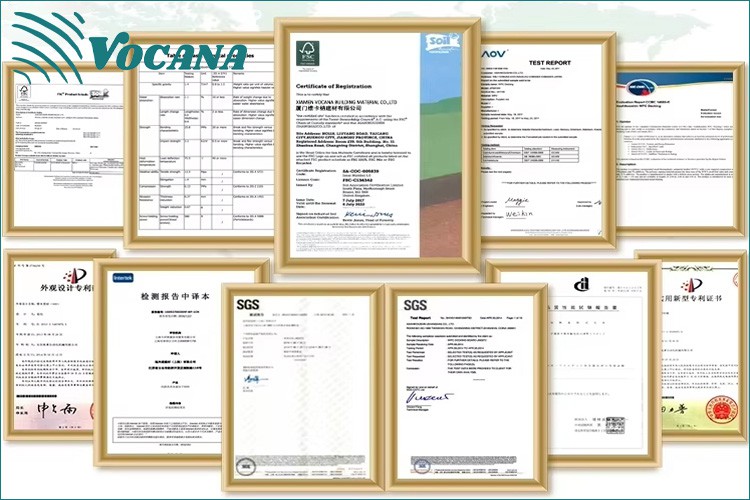
The structural integrity of Vocana WPC is verified through standardized empirical testing.
|
Physical Parameter |
Testing Standard |
Vocana Performance Result |
Architectural Significance |
|
Water Absorption |
ASTM D1037 |
< 1.0% |
Prevents swelling and buckling in monsoon climates |
|
Salt Spray Exposure |
ISO 9227 (48h) |
Pass (No blistering/pitting) |
Suitable for marine and beachfront boardwalks |
|
Fungal Resistance |
ASTM G21 |
Rating 0 (No growth) |
Arrests biological decay in high-humidity zones |
|
Slip Resistance (Wet) |
DIN 51130 |
R10 / R11 |
Satisfies safety codes for commercial aquatic zones |
|
Thickness Swelling |
EN 317 (24h) |
< 0.5% |
Maintains precise joint tolerances in facades |
|
Flexural Strength (MOR) |
ASTM D7032 |
> 25 MPa |
Supports heavy dynamic pedestrian point loads |
|
Impact Resistance |
ASTM D4495 |
Pass |
Resists fracture from dropped objects/equipment |
|
Linear Thermal Expansion |
ASTM D696 |
3.5 x 10^-5 mm/mm/°C |
Dictates required longitudinal gap calculations |
Where WPC Performs Well in Climate-Exposed Projects
WPC is not a universal answer for every construction condition, but when correctly specified, it can be a highly practical material for many outdoor and semi-outdoor applications in hot and humid regions.
Expert Engineering Tip:
When detailing WPC substructures within 8km of a coastline, specifying galvanized carbon steel or pressure-treated timber is a recipe for failure. Galvanized coatings degrade rapidly in chloride-rich air. Specify 6063-T5 aluminum alloy joists exclusively. Use 316 marine-grade stainless steel hidden clips to prevent galvanic corrosion. Substructure design must incorporate a minimum 1.5% to 2.0% slope away from the primary structure to facilitate rapid water runoff.

1. Exterior Wall Cladding
Suitable for:
Villa facades
Commercial frontage accents
Hospitality exterior walls
Balcony feature walls
Soffits and entrance elevations
Low- to mid-rise decorative facades
Why WPC works here
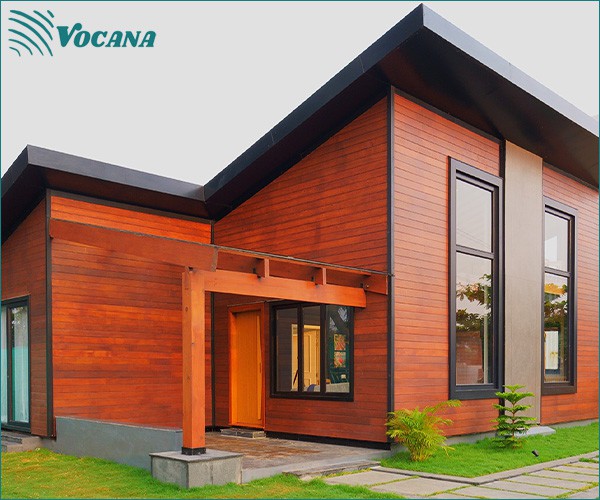
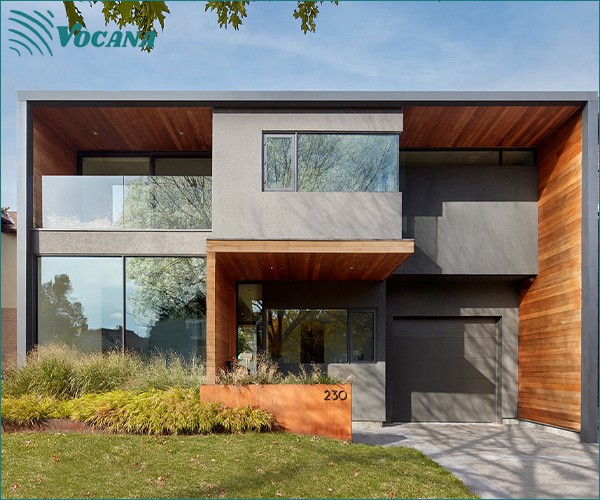
For non-structural exterior wall decoration, WPC can provide a clean architectural finish with lower maintenance than natural wood in many environments. It is especially useful where project teams want a warm wood-look appearance without the ongoing refinishing cycle associated with real timber.
Best suited when the project needs:
Decorative facade warmth
Moisture resistance
Reduced repainting or staining
Easy surface cleaning
Design flexibility in slatted or flat profiles
Important consideration
Exterior wall systems should always be treated as a system decision, not just a panel decision. Subframe material, ventilation cavity, fixing method, joint spacing, and drainage detailing all influence long-term performance.
2. Outdoor Decking
Suitable for:
Resort walkways
Poolside decks
Villa terraces
Rooftop leisure zones
Cafe and restaurant outdoor seating
Landscape viewing platforms
Why WPC works here
Outdoor decks in tropical and coastal markets are often exposed to water, sun, and heavy use at the same time. Compared with timber decks that may require periodic sealing, sanding, or repainting, WPC decking is often selected for its lower maintenance profile and more predictable surface performance.
Best suited when the project needs:
Weather-resistant walking surfaces
Low-maintenance outdoor flooring
Visual consistency across multiple phases
Easier cleaning in hospitality environments
Long-term material control for recurring developments
Important consideration
For poolside and high-humidity environments, profile selection, substructure spacing, drainage planning, and board-end detailing matter significantly. Material selection alone does not guarantee site performance.
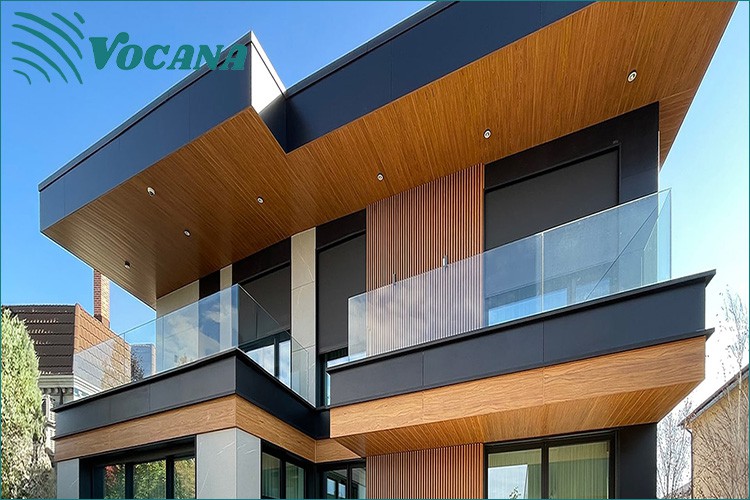
3. Outdoor Ceiling & Soffit Systems
Suitable for:
Entrance canopies
Covered walkways
Balcony ceilings
Hotel drop-off zones
Semi-outdoor dining areas
Decorative soffit applications
Why WPC works here
Outdoor ceiling systems in humid climates often suffer from finish aging, mold-prone maintenance zones, or unstable decorative materials. WPC can offer a more stable decorative option when used in properly ventilated, non-structural ceiling applications.
Best suited when the project needs:
Warm architectural ceiling finishes
Easier cleaning than painted wood
Moisture-tolerant decorative systems
Coordinated wall-to-ceiling design continuity
Important consideration
Ceiling and soffit applications should be carefully reviewed for ventilation, fixing orientation, support spacing, and service access requirements.
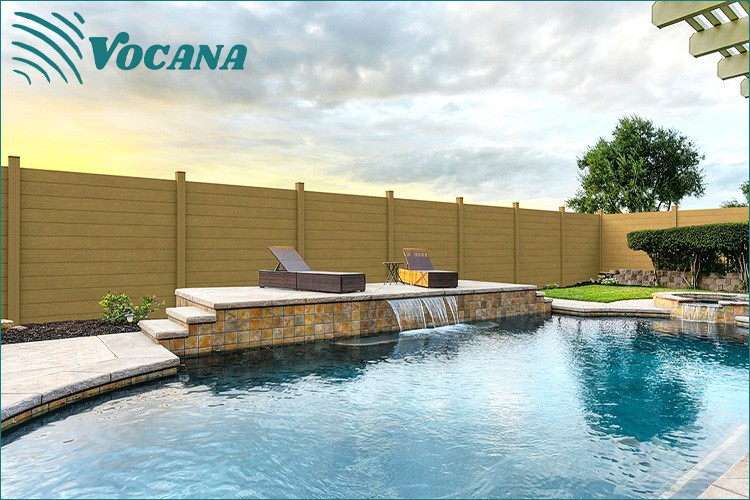
4. Fencing, Screening & Landscape Structures
Suitable for:
Villa boundary fencing
Privacy screens
Decorative outdoor partitions
Landscape feature walls
Pergola infill panels
Semi-open outdoor enclosures
Why WPC works here
In climates where outdoor timber can quickly show weathering, warping, or repeated coating needs, WPC is often chosen as a cleaner and lower-maintenance decorative boundary solution.
Best suited when the project needs:
Consistent visual appearance
Repeatable modular installations
Reduced upkeep for large developments
Practical decorative screening for outdoor spaces
How to Choose the Right WPC for Tropical & Coastal Use
For climate-exposed projects, selecting "WPC" is not enough. The real decision is which type of WPC system is appropriate for the intended use.
Choose Based on Exposure Level
Lightly exposed areas
Examples:
Covered balcony walls
soffits
Sheltered exterior ceilings
Decorative partitions
These applications may allow for a broader range of profiles and finishes.
Heavily exposed areas
Examples:
Open facades
Pool decks
Exposed walkways
Coastal-facing elevations
Rooftop outdoor zones
These conditions usually require stronger attention to:
Surface durability
Dimensional behavior
Subframe compatibility
Drainage and movement detailing
01
Choose Based on Traffic & Use Intensity
For decorative low-contact areas
Lighter profile systems may be sufficient.
For frequent-use or commercial zones
Higher durability specifications are often more suitable, especially where:
People walk barefoot or frequently
Furniture movement is expected
Hospitality traffic is high
Edge impact or frequent cleaning is likely
02
Choose Based on Surface Performance Priorities
Ask these project-level questions:
Is fade resistance a high priority?
Is the project in a high-moisture or splash zone?
Will the material be used in a premium commercial setting?
Is the client expecting minimal long-term upkeep?
Will the system be exposed to direct sunlight for most of the day?
These questions often matter more than simple color or texture preference.
03
Choose Based on Maintenance Expectations
Some buyers prioritize the lowest purchase price. Others prioritize lower maintenance over the full operating life of the project.
In hot and humid markets, materials that reduce:
Repainting
Sealing
Staining
Periodic refinishing
Difficult replacement cycles
Often create better long-term value, especially in:
Hospitality projects
developer-led communities
Repeated housing models
Commercial outdoor spaces
This is where the right WPC system can become a more practical material decision.
04
Common Material Comparison: Why Buyers Consider WPC in These Markets
For climate-exposed decorative applications, buyers often compare WPC with:
Natural timber
PVC decorative panels
Fiber cement boards
Aluminum decorative cladding
Other composite decorative systems
WPC is often considered when project teams are looking for a balance of:
Wood-look appearance
Lower maintenance
Outdoor suitability
Repeatable project supply
Practical installation systems
More predictable long-term upkeep
That said, not every WPC profile is suitable for every environment. The right recommendation depends on the intended use, exposure level, installation method, and project expectation.
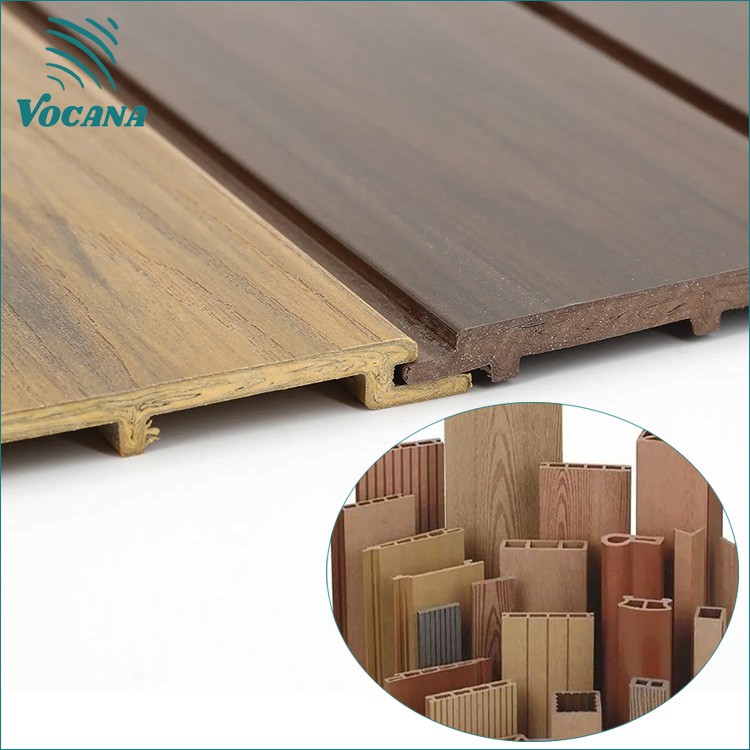
Detailed Material Comparison for Outdoor & Climate-Sensitive Projects
|
Evaluation Factor
|
WPC Material
|
Natural Timber
|
PVC Decorative Panels
|
Fiber Cement Boards
|
Aluminum Decorative Cladding
|
| Wood-Look Appearance | Strong – available in wood grain, slatted, grooved, and decorative finishes | Excellent – authentic natural timber character | Moderate – often cleaner but less natural | Moderate – usually flatter and less wood-like | Low to Moderate – depends on finish design |
| Suitability for Hot & Humid Climates | Good when correctly selected and installed | Moderate – more maintenance-sensitive in humid conditions | Moderate – better for lighter-duty or sheltered use | Good | Very Good |
| Suitability for Coastal Environments | Good for many decorative applications with proper system detailing | Moderate – can weather faster without maintenance | Moderate | Good | Very Good |
| Maintenance Demand | Low to Medium | High | Low | Low to Medium | Low |
| Need for Repainting/ Resealing | Low | High | Low | Medium, depending on the finish system | Low |
| Resistance to Everyday Outdoor Wear | Good for decorative architectural use | Moderate to Good, depending on species and upkeep | Moderate | Good | Good to Very Good |
| Installation Efficiency | Good – suitable for repeatable profile-based systems | Moderate – traditional but more labor-sensitive | Good | Moderate | Moderate to Good |
| System Repeatability for Multi-Phase Projects | Good | Moderate – natural variation may affect uniformity | Good | Good | Good |
| Visual Consistency Across Batches | Good | Low to Moderate | Good | Good | Very Good |
| Typical Initial Cost Position | Medium | Medium to High | Low to Medium | Medium | High |
| Long-Term Cost Predictability | Good | Low to Medium | Medium | Medium | Good to High |
| Best Fit Project Types | Decorative facades, decks, fencing, ceilings, and wall systems | Premium villas, decks, and natural-style features | Interior and sheltered decorative areas | Flat facade systems, modern wall applications | Commercial facades, modern architecture, exposed exterior systems |
Lifecycle Costing: TCO Analysis for Commercial Owners
For a 1,000-square-meter commercial deck in a tropical zone, the Total Cost of Ownership (TCO) of natural timber (e.g., Ipe, Teak) often exceeds its initial capital cost within 7 years. To counteract lignin degradation and moisture penetration, timber requires mechanical sanding and chemical resealing every 12-18 months.
Vocana co-extruded WPC requires zero mechanical sanding or chemical sealing. Maintenance is restricted to periodic surface washing with neutral detergents. Over a 15-year projection, Vocana WPC yields a return on investment (ROI) within 36-48 months compared to the cumulative labor and material costs of maintaining organic hardwoods.
Interactive Engineering Tool: Thermal Expansion & Joist Spacing Calculator
In hot and humid climates, improper gap planning leads to buckling. Use this tool to determine exact installation requirements based on your local climate data.
|
Ambient Temperature Variance (ΔT) |
Required End-to-End Gap (2.9m Board) |
Required End-to-End Gap (5.8m Board) |
Architectural Implication & Application |
|
10°C (18°F) |
1.5 mm - 2.0 mm |
3.0 mm - 3.5 mm |
Suitable for shaded areas or temperature-controlled semi-exterior zones. |
|
20°C (36°F) |
2.5 mm - 3.0 mm |
5.0 mm - 5.5 mm |
Standard outdoor allowance to prevent buckling during summer peaks. |
|
30°C (54°F) |
3.5 mm - 4.0 mm |
7.0 mm - 7.5 mm |
Mandatory for regions with high diurnal temperature swings (e.g., Monsoonal). |
|
40°C (72°F) |
4.5 mm - 5.0 mm |
9.0 mm - 9.5 mm |
Required for direct solar exposure in desert or extreme tropical climates. |
|
50°C (90°F) |
5.5 mm - 6.0 mm |
11.0 mm - 11.5 mm |
Extreme variance; requires Vocana proprietary sliding expansion clips. |
What Professional Buyers Should Check Before Final Material Approval
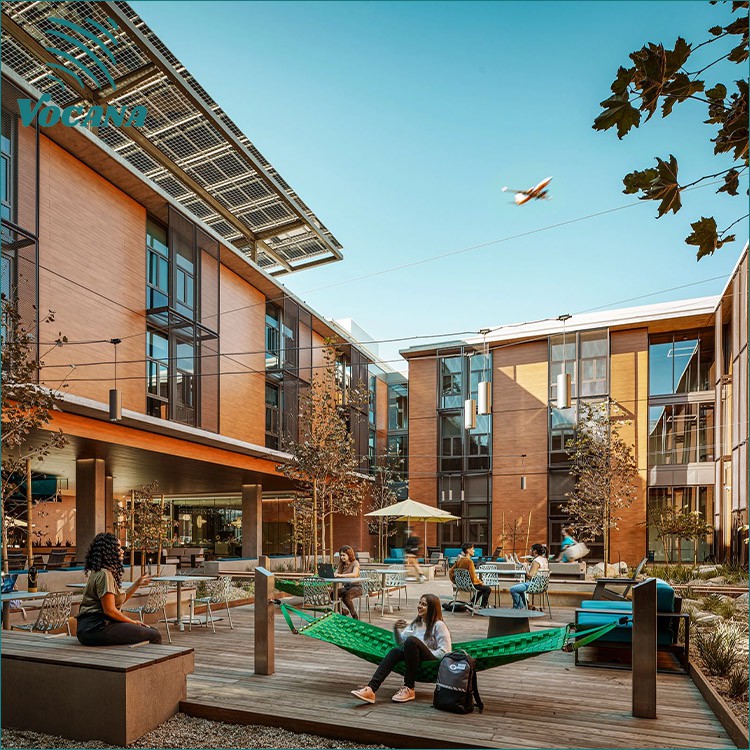
Before specifying WPC for a climate-sensitive project, it is worth reviewing:
Intended application (wall, deck, ceiling, fence, partition)
Exposure level (covered, semi-exposed, fully exposed)
Subframe and support system
Expansion and joint detailing
Drainage and ventilation planning
Expected maintenance level
Color and heat behavior in the local climate
Specification and technical support requirements
This is especially important for:
Architects preparing facade material options
Developers are comparing low-maintenance exterior finishes
Contractors evaluating installation practicality
Importers selecting products for regional demand
Project procurement teams reviewing long-term value
How Vocana Supports Climate-Sensitive WPC Projects
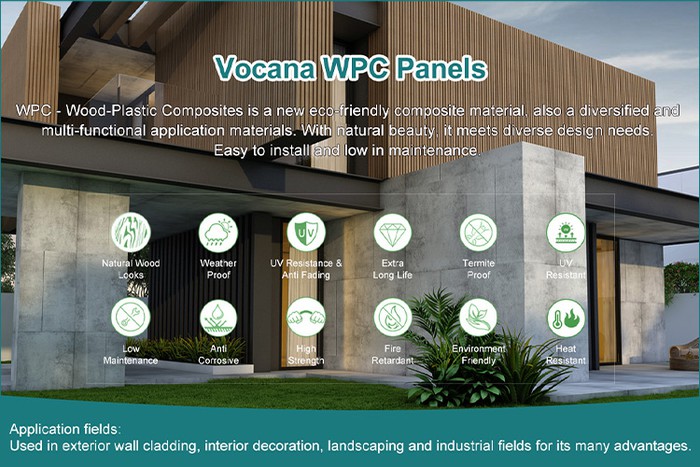
At Vocana, we work with project buyers who need more than just decorative product options. Our focus is to support project-oriented material selection with practical consideration for application suitability, finish selection, installation logic, and supply consistency.
Our WPC systems are developed for professional applications, including:
For buyers serving Southeast Asia, the Middle East, Australia, and similar climate-driven markets, material decisions often need to account for both visual design and environmental performance. This is why our support is built around project fit, not just product listing.
Vocana can assist with:
Profile matching by application
Finish and visual direction selection
Project-oriented system recommendations
Sample support for material evaluation
Production consistency for repeat orders
Export supply support for international buyers
Gallery & application cases
Need Help Matching the Right WPC to Your Climate & Project Type?
If you are comparing materials for an exterior facade, deck, ceiling, fence, or semi-outdoor architectural space, the most suitable WPC solution depends on more than appearance alone.
The right system should match your project's:
Climate exposure
Maintenance expectations
Design style
Installation conditions
Long-term usage requirements
Ensure material compliance for your upcoming commercial development. The Vocana engineering department supplies structural span tables, hardware compatibility matrices, and custom extrusion planning.
Share with Vocana about your project requirements and get support in choosing a more suitable WPC system for your market and application.
fAQ of WPC material guide
Is WPC suitable for tropical climates?
Yes, WPC is commonly used in tropical and humid environments for applications such as cladding, decking, ceilings, fencing, and decorative outdoor systems. However, suitability depends on the profile type, installation method, exposure level, and project requirements.
Can WPC be used in coastal areas?
WPC can be a practical option for coastal projects when used in appropriate decorative applications and paired with suitable subframe and fixing systems. Coastal conditions require special attention to salt exposure, ventilation, and long-term installation detailing.
Does WPC fade in strong sunlight?
Like many outdoor decorative materials, WPC can experience natural weathering over time. The level of visible change depends on surface technology, color tone, UV exposure, and installation environment. Material selection should consider local sunlight intensity and project expectations.
Is WPC better than timber for humid environments?
In many decorative building applications, WPC is selected as a lower-maintenance alternative to timber, especially where repeated sealing, staining, or repainting is a concern. The right choice depends on the desired appearance, maintenance tolerance, and project conditions.
What is the best WPC application for hot and humid regions?
Exterior wall cladding, outdoor decking, soffits, screening systems, and landscape applications are among the most common uses. The best application depends on whether the area is fully exposed, semi-covered, high traffic, or primarily decorative.
How do I choose the right WPC for a tropical or high-UV project?
The selection should be based on exposure level, traffic intensity, maintenance goals, finish expectations, and installation method. For project-based applications, it is usually better to evaluate the system as a whole rather than selecting by appearance alone.
How do structural engineers calculate required expansion gaps for facades with 40°C temperature swings?
Gaps are a function of thermal variance. Using the linear expansion coefficient of 3.5 x 10^-5 mm/mm/°C, a 2.9m board expands ~4.06mm over a 40°C increase. Contractors must reference the ambient temperature at the time of installation against the local historical maximum to set the precise gap.
What is the maximum allowable joist spacing for solid-core WPC decking on a commercial beachfront boardwalk?
For commercial pedestrian loads, specify a maximum joist spacing of 300mm (12 inches) on center. For diagonal installations (45-degree), reduce the spacing to 200mm (8 inches) to maintain span ratings and prevent deflection.
Are Vocana WPC profiles structurally rated for use as primary load-bearing beams?
No. WPC materials, regardless of mass or capping, are non-structural. They cannot be specified as primary load-bearing joists or columns. They must be supported by an engineered aluminum, steel, or timber substructure that complies with local building codes.
--- Kris, Vocana WPC Panels