

Waterproof WPC Cladding Solutions for Exterior Walls
Waterproof WPC cladding does not replace the waterproof wall behind it.
We use exterior WPC as a moisture-resistant outer finish. The wall still needs the right membrane, flashing, drainage and ventilation.
At Vocana, we therefore choose the panel and the wall detail together. This is more useful than simply calling a panel "waterproof."
Keep rain out where possible, give any water behind the cladding a way down and out, and never trap moisture inside the wall.
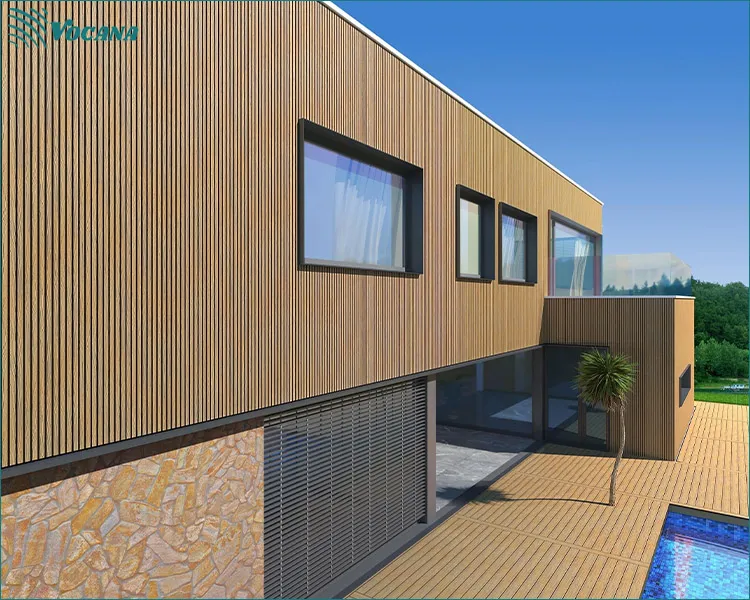
What Makes WPC Cladding Better for Wet Exterior Walls?
For product selection, see our exterior WPC wall cladding range.
How Do We Build a Moisture-Resistant WPC Wall?
The panel is only one layer.
When we review a wet-climate wall, we also ask about the wall behind it, the cavity and the metal support.
When Do We Recommend Co-Extruded WPC Cladding?
For tropical buildings, we look at the cap layer, drainage, ventilation and how quickly the wall can dry after rain.
For sun-facing walls, we check pigment stability, UV stabilizers and surface protection before the project color is approved.
Salt affects the full system. We use corrosion-aware rails and fixings, with the final metal grade chosen for the real site exposure.
For seaside buildings, use our coastal WPC cladding system guide.
What Do We Check Before We Call a WPC Panel Weather-Ready?
| Check | Why It Matters |
|---|---|
| Exact profile | Wall thickness, section and fixing shape affect the real installation. |
| Material formula | Resin, fiber, pigment and additives should match the approved project sample. |
| Water test evidence | We check the tested sample and method instead of applying one result to every WPC panel. |
| UV / aging evidence | The report should match the surface and formulation being offered. |
| Fixing system | Rails, clips, screws and movement gaps are part of exterior performance. |
Available supporting records can be reviewed through our WPC certificates and testing information. For project work, we confirm which evidence applies to the selected product.
What Have We Learned From Wet-Climate Projects?
We do not solve moisture problems by using a better panel alone. If water is trapped behind the cladding, the wall can still have problems.
For hotel or renovation work, our hotel exterior WPC facade renovation solution shows how we connect the new cladding with the existing wall.
How Do We Reduce Future Repair Costs?
We look at more than the panel price. A commercial facade may need lifts, scaffolding or closed areas when repairs are made.
- Use panel modules that can be replaced locally.
- Keep the fixing detail and profile code in the project file.
- Approve a physical color sample before production.
- Keep batch references for phased orders.
- Check drainage and joints during normal building maintenance.
This gives the owner a clearer total cost of ownership instead of focusing only on the first material price.
What Should You Send Us Before We Recommend Waterproof WPC Cladding?
- Project country and city
- Building type and facade area
- Wall drawing or existing-wall photos
- Rain, humidity, coastal or high-UV exposure
- Preferred profile, color and board direction
- Required fire, water or weathering documents
- Subframe and fixing information if already designed
- Target installation and delivery schedule
We use these details to match the WPC profile, surface, subframe, fixing method, drainage detail and project documents.
FAQ: Waterproof WPC Cladding
Is WPC cladding completely waterproof?
WPC cladding is moisture-resistant, but we do not use it as the building's main waterproof membrane. The wall still needs correct waterproofing, flashing and drainage.
Does WPC cladding need a drainage cavity?
For many exterior wall systems, yes. A ventilated cavity helps water move out and lets the rear of the wall dry. The final detail depends on the building and local wall design.
Is co-extruded WPC better for humid or coastal walls?
It is often worth checking because the cap layer gives extra surface protection. We still need suitable drainage, ventilation, subframe and corrosion-resistant fixing details.
Send Us the Wall Detail, Not Just the Panel Size
Share your facade drawing, project climate, wall type, area and required test documents. We can help you match the WPC panel with the drainage, subframe and fixing system before production.
Send My Cladding Project