

Commercial WPC Ceiling Acoustic Performance Guide
May 08, 2026
Acoustic Performance of WPC Ceiling Systems in Office Buildings
Modern office buildings are facing a growing acoustic problem. Open-plan layouts increase speech transmission, HVAC (Heating, Ventilation, and Air Conditioning) reverberation, and reflected footfall noise, especially in concrete-and-glass commercial interiors. Commercial WPC ceiling systems are increasingly specified because they combine acoustic control, low maintenance requirements, and concealed infrastructure integration within a single ceiling assembly.
For architects and commercial contractors, acoustic compliance is no longer limited to conference rooms. Employee concentration, hybrid meeting clarity, and WELL-certified workplace standards now influence ceiling material selection during schematic design.
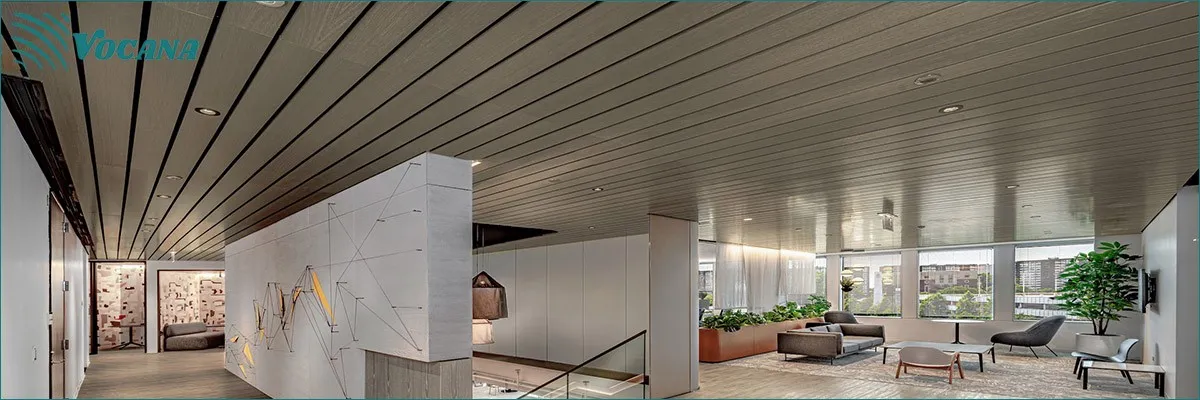
Key Takeaways for Architects & Contractors
Perforated acoustic composite panels with mineral wool backing can achieve NRC values between 0.65 and 0.85 in suspended office ceiling systems, depending on perforation ratio and cavity depth.
Hollow-core WPC ceiling structures reduce reflected mid-frequency noise by dispersing sound waves through multi-chamber internal geometry instead of reflecting sound directly like aluminum or gypsum boards.
Commercial WPC ceiling systems simplify HVAC, sprinkler, and lighting coordination by allowing hidden MEP routing above suspended grid structures while maintaining removable maintenance access panels.
Acoustic Challenges in Open-Plan Offices
Open office environments create three major acoustic problems:
Speech intelligibility across workstations
Reverberation caused by hard interior finishes
Mechanical equipment noise from HVAC systems
Concrete slabs, glass partitions, terrazzo flooring, and exposed industrial ceilings amplify reflected sound energy. In many Grade-A office developments, reverberation time (RT60) exceeds recommended workplace thresholds of 0.6–0.8 seconds.
Traditional gypsum ceilings improve aesthetics but often provide limited acoustic absorption unless additional insulation layers are added. Exposed ceilings reduce installation cost but usually worsen acoustic fatigue.
Commercial WPC ceiling assemblies address both visual and acoustic performance simultaneously through:
Hollow structural chambers
Perforated panel designs
Integrated acoustic fleece backing
Suspended cavity absorption zones
Co-extrusion of moisture-resistant surfaces
Compared with painted gypsum systems, WPC surfaces also resist moisture deformation near HVAC condensation zones and require less repainting during lifecycle maintenance.
| Ceiling Material | Typical NRC Range | Moisture Resistance | Maintenance Cycle |
|---|---|---|---|
| Painted Gypsum Board | 0.05–0.15 | Moderate | Repainting every 3–5 years |
| Aluminum Ceiling Panels | 0.10–0.25 | High | Dent repair common |
| Mineral Fiber Tiles | 0.55–0.75 | Low | Staining and sagging risk |
| Perforated WPC Acoustic Ceiling | 0.65–0.85 | High | Low routine maintenance |
NRC Ratings and Sound Absorption
Noise Reduction Coefficient (NRC) is one of the most important acoustic indicators in office ceiling specification. NRC measures how much sound energy a material absorbs rather than reflects.
For commercial workplaces, architects typically target:
NRC 0.60+ for standard open offices
NRC 0.70+ for collaborative spaces
NRC 0.80+ for conference and hybrid meeting rooms
Perforated acoustic composite panels achieve higher NRC performance through a multilayer assembly:
Perforated WPC face layer
Acoustic fleece membrane
Air cavity zone
Mineral wool or PET acoustic backing
The cavity depth behind the ceiling directly affects low-frequency absorption performance. In commercial office applications, suspended cavity depths between 150 mm and 300 mm commonly improve speech-frequency absorption.
The perforation ratio also influences acoustic behavior:
| Perforation Ratio | Acoustic Effect |
|---|---|
| 8–12% | Balanced absorption and visual uniformity |
| 15–20% | Higher mid-frequency absorption |
| 20%+ | Increased acoustic performance with stronger backing support required |
Many architects prefer WPC acoustic ceilings in humid regions because mineral fiber ceiling tiles frequently sag when exposed to fluctuating HVAC humidity conditions.
Expert Tip from Vocana Engineering Team:
For open-plan office ceilings longer than 12 meters, maintain a minimum 15 mm perimeter expansion allowance and avoid aligning perforation seams directly beneath linear air diffusers. Misaligned diffuser airflow can create localized acoustic reflection zones and visible dust streaking after long-term HVAC operation.
How Hollow WPC Structures Refract Sound Waves
One overlooked advantage of WPC ceiling systems is the internal hollow chamber structure.
Unlike dense aluminum sheets or compact gypsum boards, hollow-core WPC profiles create multiple internal surfaces that disrupt direct sound reflection pathways. Sound waves entering perforated surfaces are partially refracted into internal cavities before dissipating into insulation backing materials.
This structure provides several engineering advantages:
Reduced Mid-Frequency Reflection
Office speech frequencies between 500 Hz and 2000 Hz are the primary source of distraction in open workplaces. Hollow WPC chambers help scatter these frequencies instead of reflecting them directly back into occupied zones.
Improved Ceiling Weight Efficiency
Because the internal profile is hollow, the ceiling system maintains structural rigidity while reducing dead load on suspended ceiling frameworks.
Typical density comparison:
| Material | Approximate Density |
|---|---|
| Solid Hardwood Panels | 650–850 kg/m³ |
| Aluminum Ceiling Panels | 2700 kg/m³ |
| Hollow WPC Ceiling Profiles | 450–700 kg/m³ |
Lower system weight improves installation speed and reduces ceiling suspension stress in large commercial floorplates.
Better Thermal Stability Near HVAC Systems
Co-extruded WPC ceilings with stabilized polymer caps maintain dimensional consistency near linear diffusers and chilled beam systems. Thermal expansion coefficients are generally lower than those of standard PVC decorative panels.
In Middle Eastern commercial plazas with continuous HVAC cycling and roof slab heat transfer, WPC ceiling systems show improved surface stability compared with laminated MDF ceiling alternatives.
Hidden MEP Integration with WPC Ceiling Systems
Commercial office ceilings are no longer purely decorative assemblies. Ceiling voids now accommodate:
HVAC ductwork
Fire sprinkler pipelines
Linear lighting systems
Occupancy sensors
Audio systems
Cable trays
Smart building monitoring devices
WPC suspended ceiling systems simplify coordination because the modular panel structure allows removable access sections without damaging adjacent finishes.
Architects also benefit from cleaner visual integration:
Linear Lighting Compatibility
WPC ceiling battens can align directly with recessed LED profiles while maintaining consistent module spacing.
Concealed Return Air Systems
Perforated ceiling zones can support hidden return-air pathways while maintaining acoustic performance.
Faster Maintenance Access
Clip-lock and suspended grid systems reduce maintenance downtime compared with fixed gypsum ceiling assemblies requiring patch repair after inspection access.
For commercial retrofit projects, this becomes particularly valuable because MEP systems often change during tenant fit-out phases.
Lifecycle Cost Perspective for Commercial Developers
Commercial developers increasingly evaluate ceiling materials based on total ownership cost rather than initial procurement price alone.
Real maintenance costs typically include:
Repainting labor
Water damage replacement
Access repair after MEP maintenance
Surface discoloration
Ceiling tile replacement
Operational disruption during repairs
Commercial WPC ceiling systems reduce several of these recurring costs because co-extrusion protective layers resist:
Moisture absorption
Surface staining
UV discoloration near curtain walls
Mold growth in humid climates
In coastal office developments with salt-laden air exposure, aluminum ceiling corrosion around cut edges can become a recurring maintenance issue. WPC composite ceilings avoid oxidation-related edge deterioration.
Vocana Engineering Experience in Commercial Acoustic Ceilings
Vocana has supplied indoor decorative WPC ceiling systems for hospitality, retail, and office projects exposed to high humidity, heavy HVAC usage, and continuous public occupancy.
In Southeast Asian mixed-use developments, suspended WPC acoustic ceilings were specified for:
Large atrium corridors
Office reception areas
Conference facilities
Commercial coworking spaces
These projects required:
Stable panel geometry under high humidity
Concealed MEP integration
Low VOC interior finishes
Consistent acoustic performance during continuous HVAC operation
Vocana engineering teams typically assist architects with:
Ceiling module optimization
Expansion joint calculations
Suspension spacing recommendations
CAD-based layout coordination
Material quantity estimation
For projects pursuing sustainable building certifications, WPC ceiling systems also contribute to reduced timber consumption and lower repainting frequency across lifecycle operations.
Related System Reference:
Indoor Decorative WPC Ceiling from Vocana WPC
FAQ for commercial WPC ceiling
What is the required NRC value for commercial WPC ceiling systems used in open-plan office buildings?
Most architects specify NRC 0.65–0.80 for open offices to reduce speech reverberation and HVAC noise reflection. Perforated acoustic composite panels combined with mineral wool backing and 150–300 mm suspended cavities generally achieve these acoustic targets in commercial interiors.
How does a hollow-core commercial WPC ceiling improve acoustic performance compared with solid aluminum ceiling panels?
Hollow-core WPC profiles refract and disperse mid-frequency sound waves through internal chambers instead of reflecting sound directly. This reduces speech echo and improves occupant comfort, especially in collaborative office environments with exposed concrete flooring and glass partitions.
Can commercial WPC ceiling systems support concealed HVAC ducts, lighting, and sprinkler systems without reducing maintenance accessibility?
Yes. Suspended WPC ceiling systems are commonly designed with removable clip-lock panels or access sections that allow maintenance teams to reach HVAC, electrical, and fire protection systems without damaging adjacent ceiling finishes or requiring gypsum patch repairs.
Forward-Looking Specification Strategy for Commercial Offices
As office buildings move toward hybrid workplaces, WELL certification targets, and smart-building integration, ceiling systems are expected to perform beyond aesthetics alone. Acoustic behavior, maintenance accessibility, lifecycle stability, and MEP coordination are becoming specification priorities during early-stage design.
For commercial developers, selecting the correct ceiling assembly now affects long-term operational efficiency as much as interior appearance.
For architects and contractors evaluating acoustic ceiling systems, Vocana engineering teams can assist with:
Ceiling layout optimization
CAD-based quantity estimation
Acoustic panel recommendations
SGS and fire test documentation
Project-specific installation detailing
Send your reflected ceiling plan (RCP), CAD drawings, or ceiling section details to request engineering support, material samples, and technical data sheets for commercial WPC ceiling projects.
You Might Also Like
-

Exterior WPC Decking for Harsh Climates in Middle East & ...
-

3D WPC Wall Panels for Museum Feature Wall Gallery
-

Anti-Corrosion WPC Wall Cladding for Seaside Bars | Natur...
-

Tropical WPC Exterior Wall Cladding for Villas | Moisture...
-

Ski Resort Exterior WPC Wall Panels in Canada | Freeze-Th...
-
Custom Exterior WPC Cladding for Coastal Resorts & Pavili...