

UV Resistant WPC Cladding for 10-Year Resort Performance
May 22, 2026
Weathering and Color Fastness: 10-Year UV Performance for Resorts
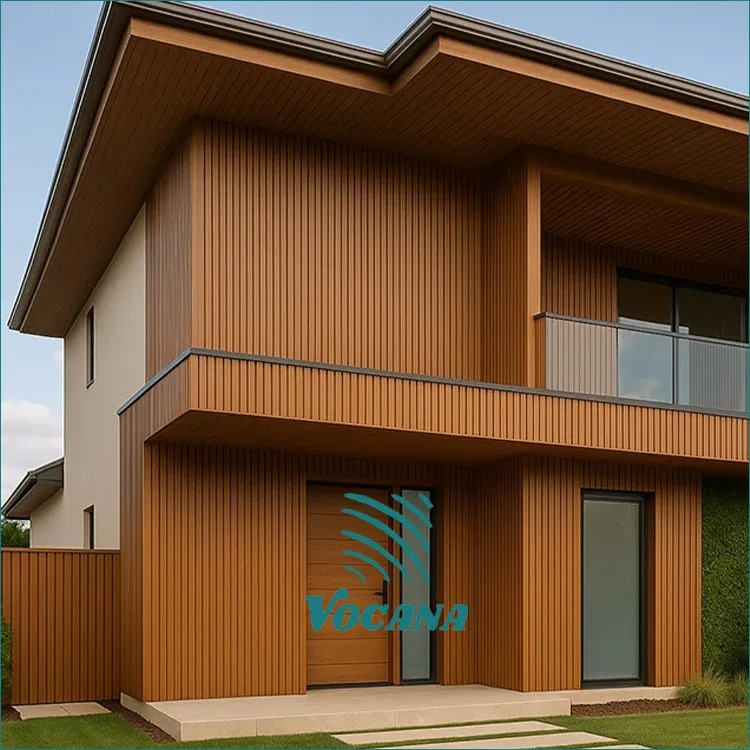
Resort developers and commercial property owners often face a recurring problem: facade materials that initially look premium begin showing uneven discoloration, coating breakdown, and visible aging after only a few seasonal cycles. UV-resistant WPC cladding has become an increasingly specified solution because replacement costs, labor access expenses, and facade maintenance budgets continue rising across hospitality projects.
For beachfront resorts, high-altitude hotels, and open commercial plazas, UV radiation rarely acts alone. Solar exposure combines with humidity cycles, salt-laden air, airborne particles, and thermal expansion movement. Material selection, therefore, becomes a long-term asset management decision rather than a decorative choice.
Co-extruded ASA protective cap technology creates a UV barrier layer that improves color retention and minimizes surface oxidation under prolonged exposure cycles.
QUV accelerated aging tests exceeding 2000 hours can simulate years of outdoor weathering and evaluate ΔE color variation performance.
Material selection directly affects total ownership cost. Repainting timber facades every 2–3 years often creates maintenance costs significantly higher than weatherproof WPC systems.
How UV Radiation Changes Building Appearance Over Time
Exterior facade systems receive continuous exposure to ultraviolet radiation. Over time, photodegradation breaks molecular bonds in many organic materials.
Typical visible symptoms include:
Surface chalking
Color bleaching
Fiber cracking
Localized warping
Coating peeling
Uneven oxidation zones
Traditional hardwood systems frequently experience pigment degradation because lignin molecules naturally absorb UV energy.
In resort projects, fading rarely occurs uniformly. South-facing elevations often age differently from shaded zones, creating noticeable inconsistencies across guest-facing architecture.
For commercial properties where visual perception influences room pricing and brand positioning, these façade variations become operational issues rather than cosmetic ones.
Lifecycle Appearance Comparison
| Material | Recoating Cycle | Surface Fading Risk | Estimated Appearance Stability |
|---|---|---|---|
| Natural hardwood | Every 2–3 years | High | Moderate |
| Painted aluminum | 5–7 years | Medium | Moderate |
| Standard WPC | 3–5 years | Moderate | Moderate |
| Co-extruded anti-fading composite wood | Minimal | Low | Long-term |
Why Co-Extrusion ASA Technology Changes Long-Term Performance
The most significant advancement in UV-resistant WPC cladding systems is the development of co-extrusion protective cap technology.
Unlike first-generation WPC materials, co-extruded products use two integrated layers:
Core Layer
Wood fiber composite substrate
Structural load-bearing section
Dimensional stability component
ASA Protective Layer
UV-resistant engineering polymer surface
Low moisture absorption characteristics
Pigment stabilization layer
Surface contamination resistance
ASA (Acrylonitrile Styrene Acrylate) is widely used in automotive exterior applications because of its weathering characteristics.
When bonded during co-extrusion production, the cap layer becomes part of the profile rather than a coating applied afterward.
This distinction matters because coatings can peel. Integrated cap layers do not rely on surface adhesion alone.
Expert Tip from Vocana Engineering Team:
For commercial facades with panel lengths exceeding 4 meters, maintain expansion gaps based on local temperature range calculations. WPC systems commonly operate within a thermal expansion coefficient range of approximately 3.5–5×10⁻⁵ mm/mm/°C. Ignoring this movement allowance often causes joint stress concentration near fastening zones rather than material failure within the panel itself.
QUV Accelerated Weathering Data
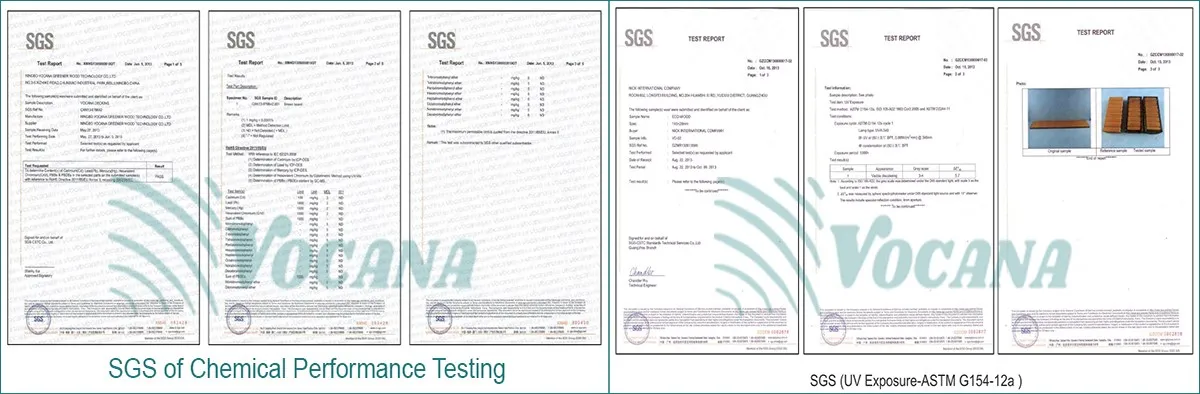
Architects often ask whether laboratory weathering actually predicts field performance.
QUV testing remains one of the most recognized accelerated aging methods used by material engineers.
Testing procedures commonly follow:
ASTM G154
ISO 4892
SGS verification protocols
A standard cycle generally includes:
UV-A exposure
Controlled condensation
Moisture cycles
Elevated temperatures
Representative performance data from co-extruded systems:
| Test Condition | Observed Result |
|---|---|
| 2000-hour QUV aging | Stable surface condition |
| Moisture exposure cycle | Low absorption |
| Surface cracking inspection | No visible cracking |
| ΔE color variation | Controlled within specification range |
| Structural deformation | Minimal |
For hospitality developments, a lower ΔE value often translates directly into better visual consistency over the years of operation.
Maintaining Premium Commercial Property Appearance
High-end resorts rarely budget only for installation costs.
Owners increasingly calculate Total Cost of Ownership (TCO):
Initial material cost + maintenance labor + replacement intervals + operational disruption
Scaffold access in hospitality environments creates substantial expenses:
Room shutdowns
Restricted guest circulation
Temporary safety barriers
Repainting labor
Surface repair work
In many coastal projects, access costs eventually exceed original material procurement expenses.
Weatherproof WPC cladding reduces recurring interventions.
For hotel operators, uninterrupted visual consistency directly supports:
Premium room positioning
Property valuation
Brand image retention
Reduced maintenance scheduling
Engineering Scenario: Coastal Resort Installation
A recent hospitality project located in a high-salinity coastal environment required facade materials resistant to:
Chloride-rich marine air
Continuous UV exposure
Relative humidity fluctuations
Windborne particles
Vocana engineering specifications incorporated:
Co-extruded ASA cap technology
Marine-grade aluminum framing
Stainless steel fastening systems
Controlled expansion joint layouts
After extended exposure cycles, field observations showed:
Stable geometry
Limited moisture uptake
Uniform color appearance
Reduced cleaning frequency
Rather than focusing only on material durability, the project team prioritized lifecycle appearance management.
That decision affected operating budgets more than initial procurement pricing.
Why Vocana Engineering Experience Matters
Material performance data alone rarely determines project outcomes.
Specification quality depends on:
Panel span calculations
Subframe engineering
Wind-load assessment
Fixing layout optimization
Expansion movement allowances
Vocana engineering teams regularly evaluate:
EN13501 fire requirements
ASTM weathering standards
QUV aging protocols
Structural loading conditions
Coastal environmental exposure risks
For architects and contractors, practical installation knowledge frequently prevents site failures that laboratory reports cannot predict.
Click for more Vocana WPC Certificates & Testing Report
FAQ for co-extruded WPC cladding
What is the expected color retention performance of co-extruded WPC cladding after prolonged exposure in tropical or coastal resort environments?
QUV aging performance depends on the cap layer chemistry and pigment stability. Systems with ASA protective layers typically maintain controlled ΔE values after 2000-hour accelerated testing, helping to preserve facade consistency under combined UV, humidity, and salt exposure.
How does anti-fading composite wood differ from painted timber when evaluating lifecycle ownership costs for hospitality projects?
Painted timber often requires recurring sanding, recoating, and replacement. Anti-fading composite wood minimizes maintenance intervals and reduces access costs associated with scaffolding, labor, and operational disruptions across occupied commercial properties.
What type of accelerated testing should architects request before specifying weatherproof WPC cladding for high-end resort developments?
Request ASTM G154 or ISO 4892 QUV aging reports alongside moisture absorption testing and ΔE color variation results. Independent SGS documentation helps verify long-term weathering performance beyond manufacturer marketing materials.
How does thermal expansion influence large-format UV-resistant WPC cladding installation design?
WPC materials expand and contract under temperature fluctuations. Panel length, fastening method, and environmental conditions determine expansion gap requirements. Incorrect spacing frequently causes localized stress at fixing points and joint deformation.
Which environmental factors create the greatest appearance risks for resort façade systems?
UV exposure alone rarely causes failure. High humidity, airborne salt particles, thermal cycling, and surface contamination collectively accelerate degradation and uneven weathering patterns across building envelopes.
Why are co-extruded ASA cap layers increasingly specified in hospitality architecture projects?
ASA surface technology offers weather resistance, pigment stability, and lower moisture absorption. Since the protective layer becomes integrated during manufacturing rather than applied as a coating, long-term surface durability generally improves.
Forward-Looking Engineering Recommendation
As hospitality projects increasingly move toward lower-maintenance envelopes and longer asset cycles, façade materials should be evaluated using operational metrics rather than purchase cost alone. Appearance retention after years of UV exposure often becomes more valuable than short-term procurement savings.
Project teams can send CAD facade drawings to Vocana for free material takeoff support, request engineering-grade WPC samples, or obtain TDS, QUV, and SGS weathering reports for specification review before project tender stages.
You Might Also Like
-

WPC Outdoor Decking Floor for Resort Poolside & Theme Par...
-

Fire-Resistant Wood-Grain WPC Ceiling Panels for Airports...
-

Wood-Grain WPC Ceiling Panels for Scenic Corridor Canopy,...
-

Slatted Interior WPC Wall Panels for Offices & Studios | ...
-

External WPC Siding for Bulk Supply | Weather-Resistant C...
-

Decorative WPC Wall Cladding for Homestays in Europe | Lo...