

Composite Fencing vs Vinyl: 2026 Guide for Projects
May 25, 2026
WPC Fencing vs. Vinyl vs. Wood: The Ultimate 2026 Comparison Guide
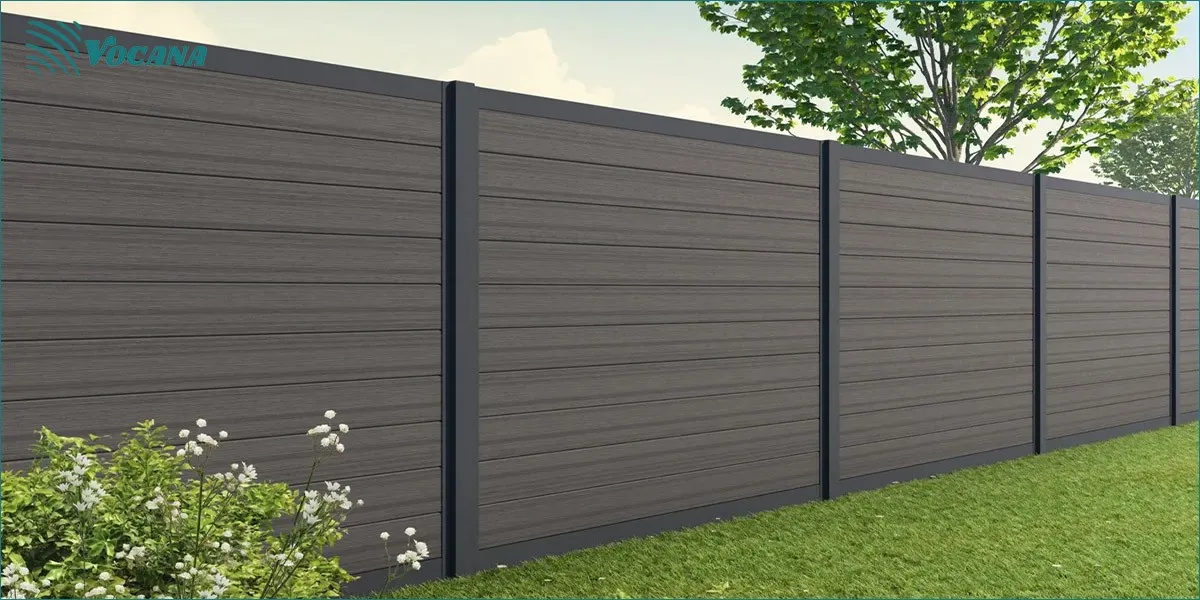
Commercial landscape projects increasingly face the same challenge: high maintenance budgets, stricter fire compliance requirements, weather exposure, and long-term replacement costs. Composite fencing vs vinyl discussions are no longer only about appearance. Architects and contractors now evaluate fencing through Total Cost of Ownership (TCO), installation efficiency, wind resistance, acoustic performance, and lifecycle stability.
A privacy fence installed around a hospitality project or mixed-use commercial development is expected to remain structurally stable after years of UV exposure, seasonal movement cycles, impact loading, and moisture variation. Material selection directly affects maintenance budgets and project risk.
Key Takeaways for Architects & Contractors
Co-extruded WPC fencing demonstrates lower fade variation after 2000-hour QUV accelerated weathering tests compared with conventional wood coatings requiring repeated refinishing cycles.
High-density WPC fence systems can reduce external noise by approximately 20–25 dB under typical residential traffic-frequency ranges due to greater material mass and panel continuity.
Wind resistance and lifecycle cost increasingly favor WPC systems over timber and hollow vinyl systems in commercial privacy fencing applications.
Performance Comparison Matrix: Wind Resistance, Impact Strength, and Ownership Cost
Material selection often fails because specifications only compare appearance and initial purchase cost. Field performance tells a different story.
| Performance Factor | Co-extruded WPC Fence | Vinyl Fence | Natural Wood Fence |
|---|---|---|---|
| Wind Load Resistance | 110–140 km/h (system dependent) | 80–100 km/h | Depends on the moisture condition |
| Impact Resistance | High-density profile structure | Moderate | Surface cracking possible |
| UV Fade Cycle | 2000-hour QUV testing | Surface discoloration after prolonged exposure | Requires repeated coating |
| Annual Maintenance | Cleaning only | Occasional cleaning | Sanding + staining + repainting |
| Moisture Absorption | <2% | Very low | High |
| Typical Service Life | 20–25 years | 15–20 years | 8–15 years |
| Lifecycle Cost | Low | Medium | High |
Wood fencing often shows expansion, biological degradation, splitting, and coating deterioration after repeated wet-dry cycles.
Vinyl performs well under moisture exposure but may become brittle in low temperatures and deform under higher thermal loading.
Co-extruded WPC systems combine wood fiber and polymer matrices with protective cap layers to create dimensional stability while reducing maintenance requirements.
Structural Considerations Behind Wind Performance
Wind loading not only affects panel surfaces.
Project engineers evaluate:
Panel moment resistance
Thermal expansion coefficient
Steel or aluminum reinforcement spacing
Fastener pull-out force
Post anchoring depth
Dynamic load distribution
High-density WPC profiles combined with internal reinforcement channels generally produce more stable fence assemblies during cyclic wind exposure.
Sound Performance Analysis: Density Changes Fence Performance
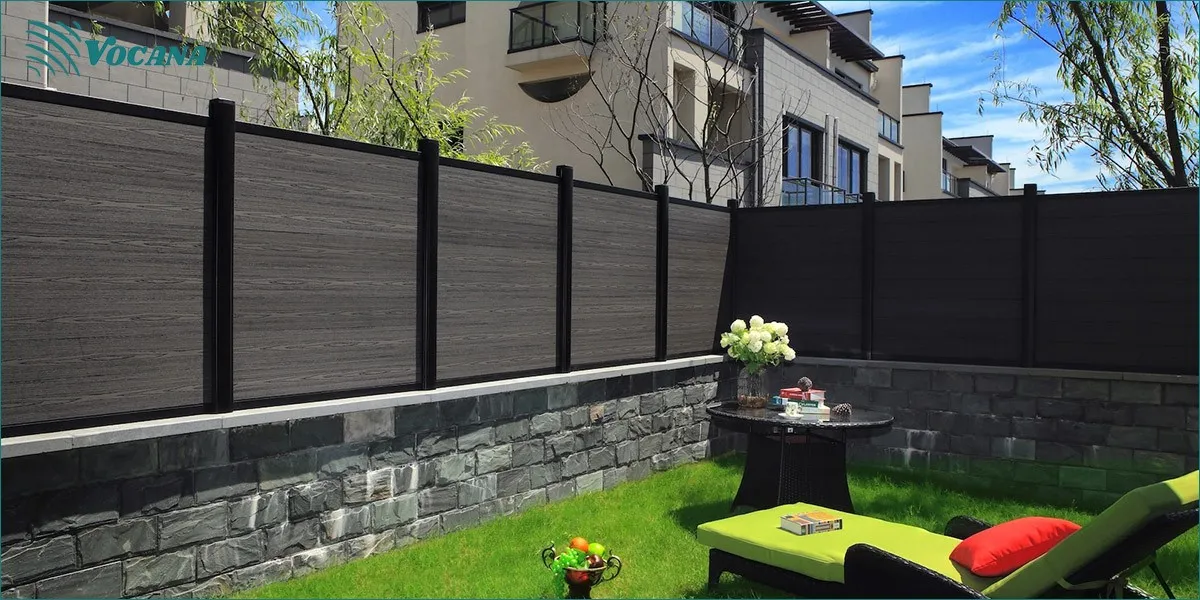
Noise reduction has become a growing requirement in hospitality developments, residential boundaries, schools, and mixed-use projects.
A soundproof garden fence requires more than visual privacy.
Material density directly affects acoustic behavior.
Approximate density comparison:
Wood: 450–700 kg/m³
Hollow Vinyl: 900–1100 kg/m³
Co-extruded WPC: 1200–1400 kg/m³
Higher mass generally increases sound transmission resistance.
Testing across traffic-frequency ranges indicates dense WPC fencing assemblies may reduce environmental noise approximately:
| Fence Material | Typical Noise Reduction |
|---|---|
| Timber Fence | 10–15 dB |
| Vinyl Fence | 12–18 dB |
| High-density WPC Fence | 20–25 dB |
For hospitality projects adjacent to roads or public spaces, a 5–10 dB difference becomes noticeable to occupants.
This acoustic advantage partly explains the increasing demand for Durable privacy fencing systems within urban commercial developments.
Expert Tip from Vocana Engineering Team:
For fence installations exceeding 1.8 m height in coastal or high-wind regions, maintain post spacing below 1.8 m center-to-center and include aluminum reinforcement inside horizontal rails. Excessive spacing causes panel vibration and long-term fastener fatigue before visible deformation occurs.
Why WPC Becomes the Upgrade Path Rather Than an Alternative
Several years ago, WPC fencing was positioned as a substitute for timber.
That market perception has changed.
Current Co-extruded WPC fence systems incorporate:
Co-extrusion protective cap technology
UV stabilizers
Anti-fungal additives
Moisture-resistant polymer shells
Multi-layer profile structures
Hidden fastening systems
These developments shift WPC from replacement material toward engineered facade-grade assemblies.
The upgrade is not an appearance.
The upgrade is performance predictability.
Commercial projects increasingly prioritize:
Reduced replacement frequency
Stable operating budgets
Less labor intervention
Higher specification consistency
Lower material waste rates
For long-term asset owners, these factors directly influence operating margins.
Vocana Engineering Experience in Extreme Environment Projects
At Vocana project engineering teams, field performance analysis remains part of product development.
A coastal hospitality project exposed to chloride-rich air and high humidity presented typical fencing challenges:
Salt aerosol exposure
UV radiation
Moisture cycling
Windborne particles
Traditional timber fencing required annual refinishing and localized replacement.
Vocana co-extruded fencing assemblies utilized:
Marine-grade aluminum reinforcement
Stainless steel connectors
Capped WPC profiles
Concealed fastening systems
Observed exposure performance after accelerated weathering and field monitoring:
Low moisture absorption behavior
Limited color shift
Stable panel geometry
Reduced maintenance interventions
Such environments often reveal weaknesses rapidly. Materials that survive laboratory conditions do not always survive coastal installation cycles.
This engineering feedback loop strengthens professional signals because field experience supports specification decisions.
WPC vs Wood: Lifecycle Cost Snapshot
Initial purchase price alone rarely predicts project expense.
Example scenario:
Commercial boundary fence, 200 linear meters, 10-year period.
| Cost Category | WPC | Wood |
|---|---|---|
| Initial Material Cost | Higher | Lower |
| Coating Labor | Minimal | Repeated |
| Replacement Boards | Limited | Frequent |
| Maintenance Visits | Low | High |
| Ten-Year TCO | Lower | Higher |
Material cost and ownership cost are rarely identical.
fAQ for composite WPC fencing
What structural spacing should contractors use for a commercial co-extruded WPC fence installed in high-wind environments above 100 km/h?
Most projects specify post spacing below 1.8 m with reinforced horizontal rails. Final spacing depends on wind zone calculations, panel dimensions, anchoring depth, and local structural code requirements.
When comparing composite fencing vs vinyl in hospitality projects, which material usually shows lower maintenance costs over 20 years?
Co-extruded WPC generally requires periodic cleaning only. Vinyl can deform, and wood commonly requires staining, repainting, or replacement. Long-term maintenance costs often shift ownership economics toward WPC systems.
Can a soundproof garden fence made from high-density WPC noticeably reduce traffic noise around residential and resort projects?
Yes. High-density WPC fence assemblies may reduce external noise approximately 20–25 dB, depending on panel thickness, continuity, installation method, and surrounding environmental conditions.
How does a co-extruded WPC fence behave under UV exposure in high-temperature Middle East environments?
High-performance capped WPC systems with UV stabilizers and QUV-tested protective layers exhibit reduced surface fading and improved dimensional stability during prolonged solar exposure.
Why do architects increasingly specify durable privacy fencing instead of traditional timber systems?
Architects evaluate lifecycle predictability, maintenance labor reduction, moisture resistance, and material stability. Long-term operating performance often matters more than initial purchase price.
Which sustainable building materials support lower maintenance demand and reduced replacement frequency?
Many commercial projects increasingly specify Sustainable building materials and Sustainable building products that combine recycled content with long service life. WPC materials frequently satisfy both requirements while reducing resource consumption over time.
Forward-Looking Engineering Recommendation
Fence specifications are increasingly moving toward performance-based design rather than appearance-driven selection. Future projects will likely integrate acoustic performance, thermal movement analysis, lifecycle carbon assessment, and weather resistance into a single specification framework.
For architects and project contractors evaluating fencing systems, early-stage engineering coordination produces measurable cost savings.
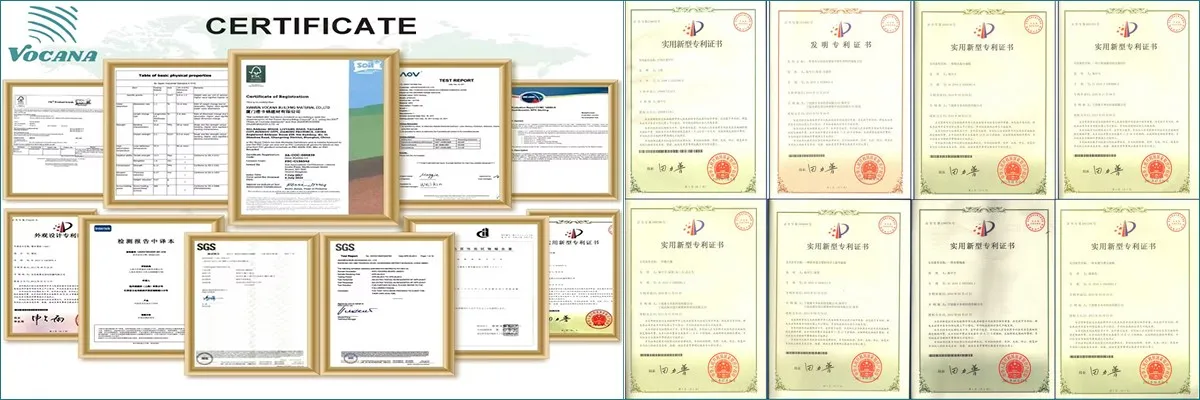
Send your CAD drawings for a free quantity takeoff analysis, request engineering-grade WPC samples, or obtain Vocana TDS documentation and SGS testing reports for project evaluation.
You Might Also Like
-

Woodgrain Outdoor WPC Decking for Theme Parks, Museums & ...
-

Open-Top WPC Pergola for Sun Shade & Modern Facade Extens...
-
UV-Resistant Outdoor WPC Decking for Resorts, School Cour...
-

Breathable Exterior WPC Wall Panels for Cafés & Semi-Outd...
-

Fire-Retardant Exterior WPC Cladding for Office Buildings...
-
Lightweight Exterior WPC Wall Panels for Apartment Buildi...