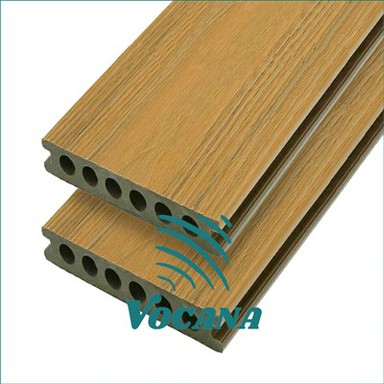
Why is WPC Panel Better Than PVC? WPC Cladding vs PVC Wall Panel
Feb 09, 2026
Key Takeaways
WPC panels offer superior durability for exterior applications, resisting warping, fading, and impact damage better than PVC panels.
WPC cladding is a cost-effective solution with lower long-term maintenance needs, making it ideal for large-scale commercial and residential projects.
PVC panels are rigid, but WPC provides greater flexibility in extreme temperatures, which is crucial for structural integrity in outdoor environments.
WPC cladding's superior fire resistance makes it an increasingly popular choice for projects where safety and compliance are priorities.
Vocana's advanced lab testing ensures our WPC panels meet international standards, providing consistent quality for all projects.
When comparing WPC cladding (Wood Plastic Composite) to PVC wall panels, it's essential to look beyond surface-level differences. The decision to use one over the other impacts your project's performance, longevity, and ROI. Both materials offer their advantages, but WPC cladding stands out in key areas that are critical for large-scale commercial and residential projects.
In this article, we'll compare WPC cladding and PVC wall panels across several performance criteria, focusing on durability, fire resistance, cost-efficiency, and installation ease.
1. WPC Panels vs PVC Panels: Material Composition and Durability
Material Composition
WPC Cladding
WPC is a composite material made from a blend of wood fibers (typically bamboo or hardwood) and polymeric resins, primarily HDPE (High-Density Polyethylene) or PVC. This combination delivers high impact resistance, flexibility, and low moisture absorption, which makes it suitable for both indoor and outdoor use.
PVC Panels
PVC (Polyvinyl Chloride) is a rigid, synthetic polymer used extensively for cladding applications, particularly in exterior wall systems. It's generally low maintenance, UV-resistant, and cost-effective. However, it tends to be more brittle than WPC, making it prone to cracking or deformation under extreme weather conditions.

The main visual difference between WPC and PVC is that PVC has a whiter and brighter cut surface, while WPC has a darker cut surface with wood powder particles.
Durability Comparison
WPC has higher impact resistance and flexibility than PVC, meaning it performs better under temperature changes, reducing the risk of warping and cracking.
PVC panels, though highly UV-stable, can be prone to cracking and yellowing when exposed to prolonged sunlight, especially in extreme heat or cold.
Summary: WPC cladding provides a more durable, long-term solution for projects in regions with varying weather conditions, while PVC is better suited for more stable, less demanding environments.
2. Fire Resistance: Which Material Performs Better?
Fire safety is a crucial consideration for any building material, particularly for commercial structures.
WPC Cladding
WPC panels generally contain flame-retardant additives that help slow the spread of fire. When formulated properly, WPC can achieve a Class B fire rating (according to EN 13501) with low smoke emission, making it a reliable option for building facades.
PVC Panels
PVC is naturally flame-resistant due to its chemical structure. However, PVC may emit toxic fumes when exposed to fire, which poses a significant safety risk. Most standard PVC panels meet Class E or Class D fire ratings in building code standards.
Conclusion: WPC cladding offers better fire safety performance when considering both fire retardancy and lower toxicity in case of fire.
Vocana WPC employs a unique, independently developed formula, which, through the addition of various fire-retardant additives, comprehensively enhances the fire resistance of WPC materials in terms of flammability index, oxygen index, and smoke concentration.
3. Performance Over Time: Warping, Fading, and Long-Term Durability
WPC Cladding
Due to its composite nature, WPC is more resistant to moisture absorption and thermal expansion compared to PVC. This results in less warping or shrinkage over time. WPC is particularly effective for outdoor applications, where exposure to humidity and UV radiation can degrade other materials. UV stabilizers and protective caps further enhance its long-term color stability.
PVC Panels
While PVC is resistant to water absorption, it can discolor or fade when exposed to sunlight for extended periods. The rigid nature of PVC also means it is more likely to crack or warp when subjected to temperature fluctuations or high impact.
Verdict: WPC panels are more reliable for long-term performance, particularly in exterior applications exposed to sunlight, moisture, and temperature shifts.
4. Cost-Effectiveness and Installation
1. Material Costs
WPC Cladding
WPC is generally more affordable than PVC for large-scale projects. The cost per unit of WPC panels is lower, especially given their long-term durability and low maintenance requirements. WPC also offers custom formulations, which can optimize cost performance based on specific project needs.
PVC Panels
PVC panels tend to be cheaper initially but may incur higher maintenance costs over time due to their lower durability and sensitivity to extreme conditions. Additionally, PVC panels are more prone to fading and discoloration, leading to the need for replacement or touch-ups.
2. Installation
WPC cladding is easier to cut and install, particularly in large-scale applications. Its flexibility makes it suitable for a variety of installation methods, from clipped systems to screw-down installations.
PVC panels, while lighter, can be more rigid, making installation slightly more complicated when dealing with custom designs or complex surface applications.
Conclusion: WPC cladding offers better cost efficiency for large commercial projects and is generally easier to install, reducing overall labor costs.
WPC vs PVC: Materials Performance and Application Comparison
| Property/Feature | WPC Cladding | PVC Panel |
|---|---|---|
| Fire Rating | Class B (with additives) | Class D-E |
| Impact Resistance | High | Medium |
| UV Resistance | High (with capstock) | Medium |
| Water Absorption | Low | Low |
| Warping Risk | Low | High |
| Cost Efficiency | High (long-term) | Medium |
| Typical Use | Exterior facades, commercial projects | Interior walls, low-impact areas |
Why Choose Vocana WPC Cladding?
At Vocana WPC, we understand the demands of large-scale commercial and residential projects. That's why we specialize in high-performance WPC cladding, tested to international standards for durability, fire safety, and weather resistance.
Our Advantage
In-house laboratories for testing impact resistance, fire performance, UV stability, and water absorption.
Custom formulations to meet specific project requirements, including enhanced fire resistance and tailored aesthetics.
Complete product supply with support for large-scale projects, ensuring timely delivery and comprehensive project coordination.
Vocana's WPC cladding combines the best of both worlds: superior performance with cost-effective pricing, offering long-term reliability and high ROI.
Our Service
For large-scale developments, execution capability determines final project performance.
Vocana operates as a project-oriented WPC solution provider, not just a panel manufacturer.
Full-System Product Supply for Complete Projects
We support entire facade and outdoor wall systems, not isolated SKUs.
Our project supply scope typically includes:
Exterior and interior WPC wall cladding panels
Matching corner trims, starter profiles, edge caps
Substructure components (joists, battens, fixing systems)
Color and texture consistency across multiple batches
This reduces compatibility risk, sourcing complexity, and installation delays.
FAQ: WPC vs PVC Wall Panels
1. Is WPC cladding more expensive than PVC?
WPC cladding is generally more affordable in the long run, as it requires less maintenance and has a longer lifespan, reducing replacement and repair costs over time.
2. Can WPC cladding be used in interior applications?
Yes, WPC panels can be used indoors, but they are ideal for exterior use due to their superior resistance to moisture, UV rays, and temperature fluctuations.
3. Does PVC cladding last longer than WPC?
PVC cladding can last longer in certain controlled environments, but WPC is more durable overall, especially in outdoor settings subject to moisture, UV exposure, and temperature variations.
4. How can I ensure the WPC panels I buy are high quality?
Look for batch-level testing, lab reports, and ask about density and water absorption rates. Ensure the supplier has in-house testing facilities to guarantee consistent quality.
Next Step
For your next commercial or residential project:
👉 Contact Vocana's engineering team for a free sample box with full lab data
👉 Download our 2026 WPC Cladding Installation & QC Guide
Make informed, data-driven decisions for your project's success.